
Working Together to Address the Housing Shortage
10 Ideas for a Growing Berlin with Sufficient Housing, Stable Rents, and Economic Strength
The situation is serious—and the housing shortage is the key issue for the future
Berlin is growing—but housing construction isn't keeping pace. The result is clear:
• Rising rents
• Growing social tensions
• Families can't find apartments
• Skilled workers are turning their backs on Berlin
The housing shortage is not a law of nature. It is the result of political failures, slow procedures, and misplaced priorities. The polarization between tenant protection and new construction, between regulation and investment, is blocking progress. Berlin needs a fact-based, bipartisan housing policy that prioritizes expanding the housing supply.
If we want affordable rents, we need to build more. New construction is the key to easing pressure on the market. At the same time, we need targeted social support for households facing particular hardship—without slowing down the urgently needed new construction. How can we make this work? What should we avoid?
Below are 10 VBKI proposals for a Berlin with sufficient housing, stable rents, and economic strength.
Our 10 Ideas
1. The housing shortage is Berlin's biggest location-related problem
The crisis has long since ceased to affect only those looking for housing—it threatens the entire region:
- 89 percent of companies view housing as a key issue for their employees
- Open positions remain unfilled
- Investments are being postponed or canceled
Berlin is in danger of losing its economic momentum—not because of a lack of ideas, but because of a shortage of housing.
2. Redistribution is no substitute for new construction
All too often, the political debate revolves solely around regulation, intervention, and redistribution.
But:
- Rent caps, bans, and debates about expropriation don't create a single new apartment
- Uncertainties delay investment decisions and deter investors
- In the long run, they will cause a shortage of supply
Without new construction, any intervention is merely a stopgap measure.
3. From a Marathon to a Sprint: Radically Speeding Up Administration and Procedures
Berlin moves too slowly—it often takes more than 10 years from planning to approval. That is unacceptable.
Specific proposal: Significantly speed up the planning process; ensure that zoning plans are finalized within a maximum of 2 years!
To pick up the pace, we need a real systemic change:
- closer, binding cooperation among all relevant authorities
- A swift and transparent balancing of interests, with a clear priority on housing construction
- Streamlining regulations, full digitization of all procedures
- Mandatory deadlines for planning and approval processes
- clear lines of responsibility and more efficient coordination
- More staff, expertise, and a commitment to implementation in the building departments
Such an approach breaks through political gridlock, provides planning certainty, enables new construction to proceed at a significantly faster pace, and reduces costs.
A city that wants to grow needs a government that can take action.
4. Reduce Construction Costs – Readjust Standards
High construction costs are a key factor driving up prices. In recent years, they have risen by more than 30 percent, depending on the segment. Therefore:
- Review and Simplify Standards and Guidelines
- Promote new, more efficient floor plans
- Ensure that Building Type E is fully compliant with construction and rental laws
- Expand serial and modular construction through type approvals
The VBKI expressly supports new approaches to cost reduction. This requires a legally enshrined baseline standard that ensures legal certainty in construction contract and rental law while also facilitating simpler construction.
An important step in this direction is the numerous statutory and regulatory measures implemented by the building authority as part of the “Einfach Bauen Berlin” initiative (simplification of standards and procedures), which systematically consolidate these simplifications.
Affordable rents are the result of affordable housing construction.
5. Open up prime locations to people—enhance the quality of life and living environments
Berlin is not yet making optimal use of many of its central areas. At the same time, there is a shortage of housing, particularly in well-connected locations. Vacant properties, underutilized land, and outdated land uses offer significant potential in this regard.
In particular, the repurposing of existing brownfield and commercial sites can create additional housing while also generating attractive open spaces that offer a high quality of life.
Therefore:
- Faster approval of land for development
- Open up the banks of the Spree and other central locations more to residential use and public access
- Enable development along the perimeter of Tempelhofer Feld
- Systematically put underutilized areas (e.g., storage areas or brownfield sites) to use
- Enhancing the Quality of Life: Expanding Public Spaces, Green Areas, and Access to Water
- Resolve conflicts over land use pragmatically and clearly prioritize housing construction
Modern urban development follows the principle of “inward development before outward expansion.” Central locations, in particular, enable dense, mixed-use, and vibrant neighborhoods with short distances between destinations. This reduces commuter traffic, eases the strain on infrastructure, and improves quality of life.
International experience shows that consistent use of inner-city land is one of the most effective ways to ease housing market pressures—more quickly and sustainably than developing new construction areas on the outskirts of cities.
6. Enabling Homeownership for Personal Use—An Important Pillars of Retirement Planning and Social Diversity
Homeownership is a key pillar of social stability, wealth accumulation, and retirement planning. At the same time, it is becoming increasingly out of reach for large segments of the middle class—especially young families.
Therefore:
- Take targeted steps to make it easier to purchase a home for personal use (e.g., by reducing the real estate transfer tax for owner-occupiers)
- create a reliable framework, for example, for private financing
- Affordability should not be ensured in the long term through subsidies, but rather by reducing cost drivers above all else
Specific proposal: Introduce a quota for first-time homebuyers with moderate incomes who will live in the homes themselves in large new construction projects!
Homeownership strengthens ties to the city, stabilizes neighborhoods, and promotes social diversity. Especially in light of demographic changes, it is also an indispensable component of private financial planning. Homeownership complements the rental market—it does not replace it.
7. Enforce the Law – Build Trust
Legal violations such as excessive rent, illegal vacation rentals and subletting, or misuse of property distort the market and undermine trust.
The following are required:
- stricter controls
- effective sanctions
- Consistent enforcement of existing laws
Those who don't follow the rules hurt everyone—especially tenants.
8. Allocate housing more efficiently—on a voluntary basis, not by force
Berlin has a massive efficiency problem with its housing stock. Many people live in apartments that are too large because moving is financially unattractive.
- more than 56% single-person households
- Many large apartments are occupied by single people
But coercion doesn't help—incentives do.
A concrete proposal: Don't accept the status quo—actively promote moving to a new home!
For example, through:
- Relocation Bonuses and Financial Incentives
- Support for home exchanges (e.g., platforms and advice)
- Enabling housing authorities to actively reach out to tenants and offer smaller apartments, rather than allocating housing exclusively through a lottery system
- Regular Needs Assessments for Tenants of WBS Apartments
The goal is to create attractive alternatives—not to put pressure on people.
Even a moderate increase in the rate of moving could lead to better satisfaction of housing demand. Greater turnover in the housing stock can make thousands of apartments available—especially for families.
9. Tailor Funding to Specific Goals: Focus on Impact
Public funds must be directed where they will have the greatest impact:
- Construction of New Public Housing Units
- Modernization and Decarbonization
Support mechanisms such as the housing eligibility certificate must be reviewed regularly to ensure that those in need receive support for as long as necessary and to prevent windfall effects.
10. Socialization: Expensive, Risky, Counterproductive
The debate over socialization merely fuels sensationalism and serves the purpose of political mobilization. It distracts from the real problem—the housing shortage.
Socialization means:
- Costs in the tens of billions
- not a single new apartment
- widespread uncertainty and a pullback by investors
- Uncertainty in the financial markets, higher interest rates on all real estate loans.
Socialization does not solve the housing crisis—it entrenches and exacerbates it.
Conclusion: For a growing city with sufficient housing
Berlin is at a turning point:
• Keep blocking—or finally build
• Keep managing—or actively shape the future
• Keep polarizing—or act together
The goal is achievable: a city with sufficient housing, stable rents, and economic strength. The solution lies in close cooperation among politicians, government officials, the private sector, municipal enterprises, and the city’s residents.
Together, we must
• build more
• approve projects more quickly
• facilitate investment
• use financial resources effectively
• make better use of existing resources
Anything else will delay a solution. Berlin needs sufficient housing—in the right locations, for people of different income levels, and in mixed-income neighborhoods. This can only be achieved if municipal, cooperative, public-interest, and private entities are all able to build on an equal footing—under clear, fair, and reliable rules.
The Berlin housing market does not need any more disputes or ideological polarization. It needs a clear commitment to action.
10 Ideas for a Berlin with Sufficient Housing, Stable Rents, and Economic Strength
You can download the VBKI position paper here.
Download >
10 Ideas for a Berlin with Sufficient Housing, Stable Rents, and Economic Strength
You can download the VBKI position paper here.
Download >
Your contact persons
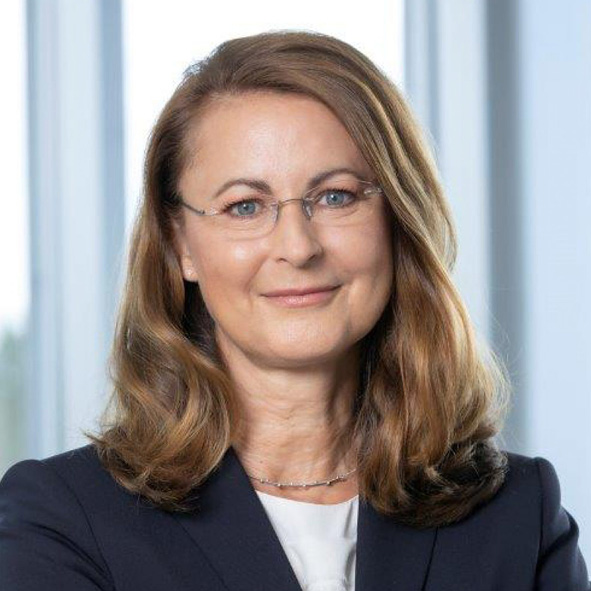
Anette Weller
Co-Chair of the VBKI Real Estate Committee, Special Representative of Apleona GmbH
presse@vbki.de
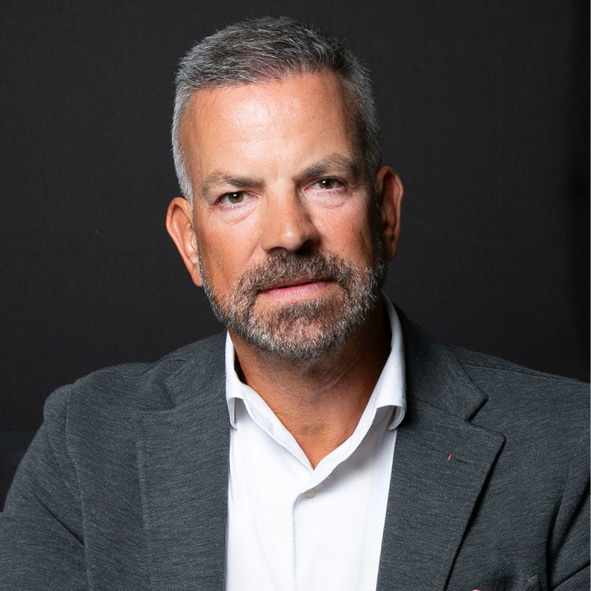
Christian Schulz-Wulkow
Co-Chair of the VBKI Real Estate Committee,
Managing Partner, Blacklake GmbH
presse@vbki.de
About us
Media service
Follow and share
Our premium partners