
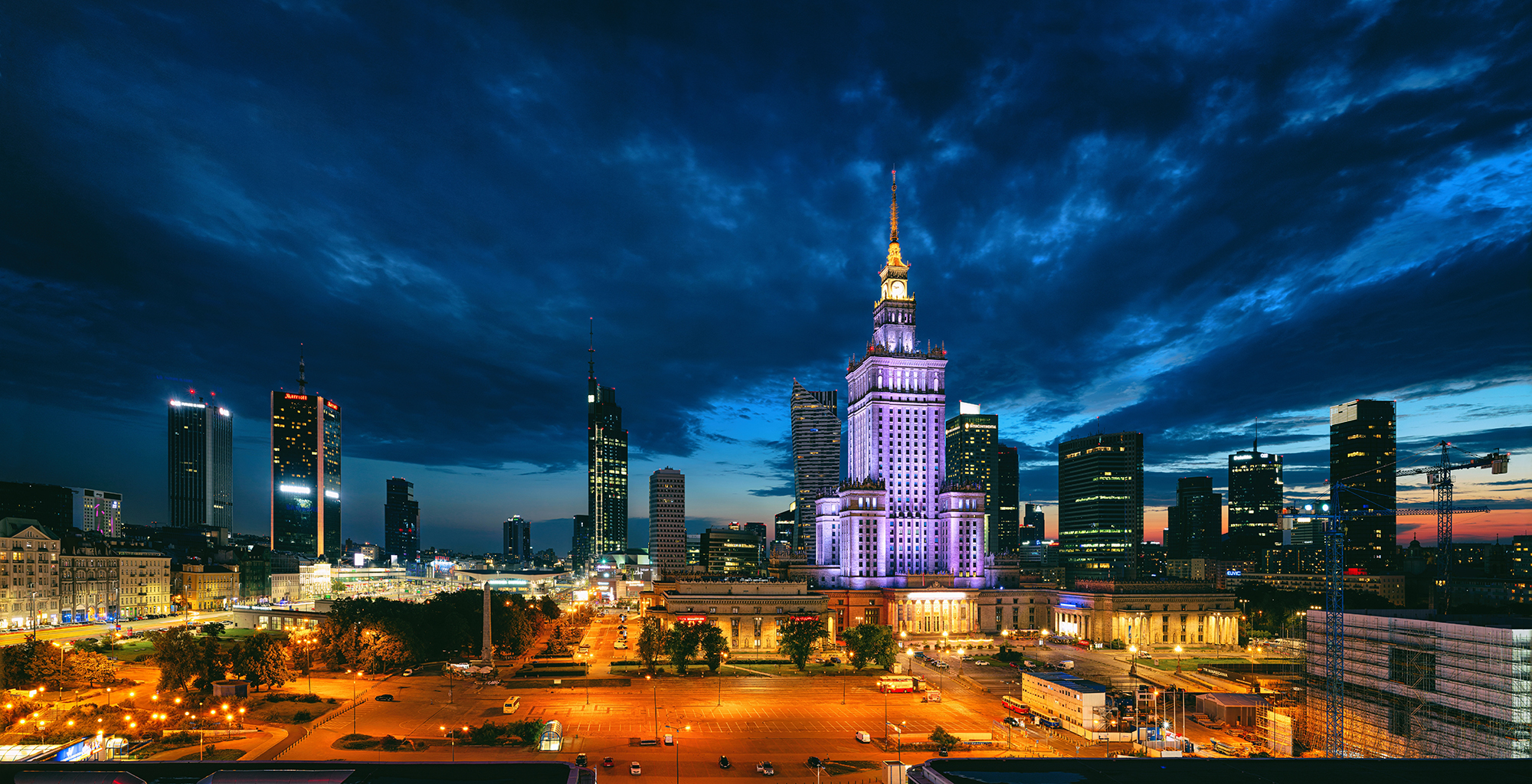
Warsaw - twin city and role model for Berlin
Europe has more points of the compass than just the West: Opinion piece by Kirsten Giering and Johannes von Thadden
Germany still looks at its Eastern European neighbors with a certain indifference. France remains the preferred partner, Paris the first destination of new chancellors, French the second foreign language in our schools. The foreign policy fixation on the West has grown historically, but it no longer does justice to the reality of a changing Europe. After all, the future is no longer just made between Brussels, Berlin and Paris. Anyone looking for economic dynamism, technological innovation and political renewal must also look to the East. Where awakening, resilience and creative power are concentrated - and where countries like Poland are about to take on a leading role in the future of Europe.
Poland is increasingly moving to the center of Europe - politically, economically and strategically. The country has long been more than just a reliable NATO partner. It is a driving force, a cornerstone of security policy and a European player that is confidently claiming its place on the European stage. And rightly so. In recent years, Poland has shown what is possible when political determination meets social drive.
Warsaw, for example, offers excellent illustrative material when it comes to shaping the urban future, not least for its partner city Berlin. While we on the Spree are treading water on many issues, the Polish capital is showing how transformation can succeed in concrete terms: efficiently, digitally, cleanly and safely. Poland's Deputy Foreign Minister Henryka Mościcka-Dendys recently revealed this impressively at a VBKI event. The figures also speak for themselves: according to surveys, 98% of people in Warsaw are satisfied with safety in their city - figures that Berlin can only dream of.
The future of the European Union will also be shaped - perhaps even decisively - in Warsaw. This requires a rethink in Germany. It is time to broaden our perspective, cultivate new partnerships and learn from each other - on an equal footing, with respect and openness.
In fact, according to international rankings, the city of two million people is one of the safest metropolises in Europe - even though it has taken in hundreds of thousands of refugees in the wake of the Russian war of aggression against Ukraine, without any mass accommodation or social destabilization. Instead, Warsaw acted boldly, quickly and unbureaucratically. The recipe for success: clever planning and a shared understanding of responsibility. Civil society, administration and political leadership are pulling together - with visible success.
Warsaw also sets standards in urban development. Parks and green spaces are being maintained and expanded, and the cleanliness of the cityscape is striking. While Berlin is struggling with littered squares and neglected facilities, Warsaw is investing in urban greenery: with programs such as "One Million Trees for Warsaw", the city is setting an ecological and citizen-oriented example.
And where Berlin is often still stuck in the analog world, Warsaw has long since gone digital. Citizens can complete almost all administrative procedures online, efficiently and easily. This is made possible by a central identification number ("Pesel"), which simplifies administrative processes, breaks down data silos and promotes digital innovation. While printers are still rattling away in German offices and applications are sent by fax, Warsaw is showing how digitalization can work in the service of the people. Digital efficiency instead of paperwork. Instead of queues, user orientation and a service mentality.
Education policy is particularly noteworthy. While there is often still debate in Germany about whether integration is even possible, Warsaw has long since shown how it can be achieved: refugee children are quickly enrolled in school, Ukrainian teachers are integrated and recognized. Schools are opening up in a pragmatic and solution-oriented way. An impressive example of a state that does not complain about challenges, but shapes them.
Berlin can also learn a lot from Warsaw when it comes to mobility. While plans are planned, debated and postponed for years here, things are being built there. New subway lines are being built in record time, complemented by a dense network of streetcars, electric buses and a well-developed bicycle infrastructure. Public transport is punctual, clean, air-conditioned - and therefore a real backbone of urban quality of life
Warsaw proves that it is possible to overcome complex challenges - if you act courageously, simplify processes and focus on people. It is not about ideological trench warfare or clinging to outdated structures, but about the willingness to change - for the benefit of all. It is precisely this attitude that is lacking in many parts of Germany, where the impression is often created that change is primarily perceived as a threat rather than an opportunity.
If you want to look to the future, you have to let go of old ways of thinking. Germany would be well advised to stop focusing solely on its Western partners and to recognize and exploit the strategic, cultural and economic relevance of Eastern Europe. Eastern Europe is not a backyard, not a "new market" in the sense of old investor logic. It is the heart and engine of a new European self-image - and Poland is its driving force.
The future of the European Union will also be shaped - perhaps even decisively - in Warsaw. This requires a rethink in Germany. It is time to broaden our perspective, cultivate new partnerships and learn from each other - on an equal footing, with respect and openness. It would be useful if members of the Berlin Senate and the new Federal Minister for Digital and State Modernization, Karsten Wildberger, were to see for themselves what can be learned from Warsaw - and then put this into practice. Europe has more points of the compass than just the West. Those who recognize this will not only strengthen the European project, but also their own future viability.
This article was published in the Tagesspiegel on September 3.
Authors:
Kirsten Giering is founder and owner of SINICA CONSULTING and co-chair of the VBKI committee "International Politics and Economics".
Johannes von Thadden lives in Warsaw and Berlin and is CEO of Draco Aircraft. Previously, he was the Federal Managing Director of the CDU, among other things.
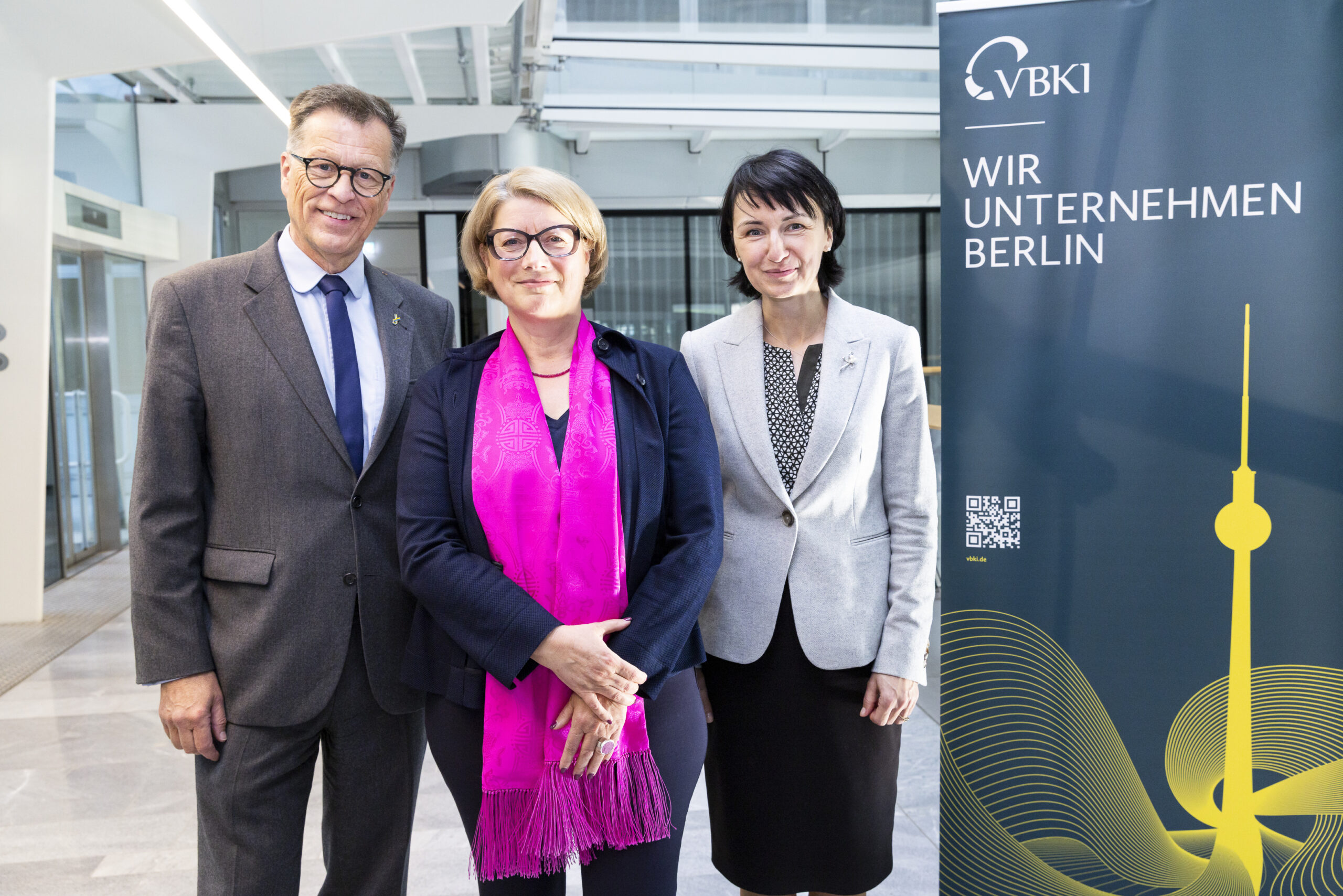
Johannes von Thadden and Kirsten Giering - with Polish Deputy Foreign Minister Henryka Mościcka-Dendys (right).
You might also be interested in
Kids fit for Europe: Friendship connects
Our traditional writing competition entered its 24th round - and this time everything revolved around the moving theme "True friendship is...".
Ceremonial conclusion of the VBKI Mentoring Program 2025
Mentors and mentees accompanied each other for a year, exchanging experiences and making valuable contacts
Memorial concert for the 80th anniversary of the end of the war
An evening of remembrance, music and responsibility