
Pressure for reform: How can Germany regain momentum as a business location?
Text: Annette Kusche | Policy Officer
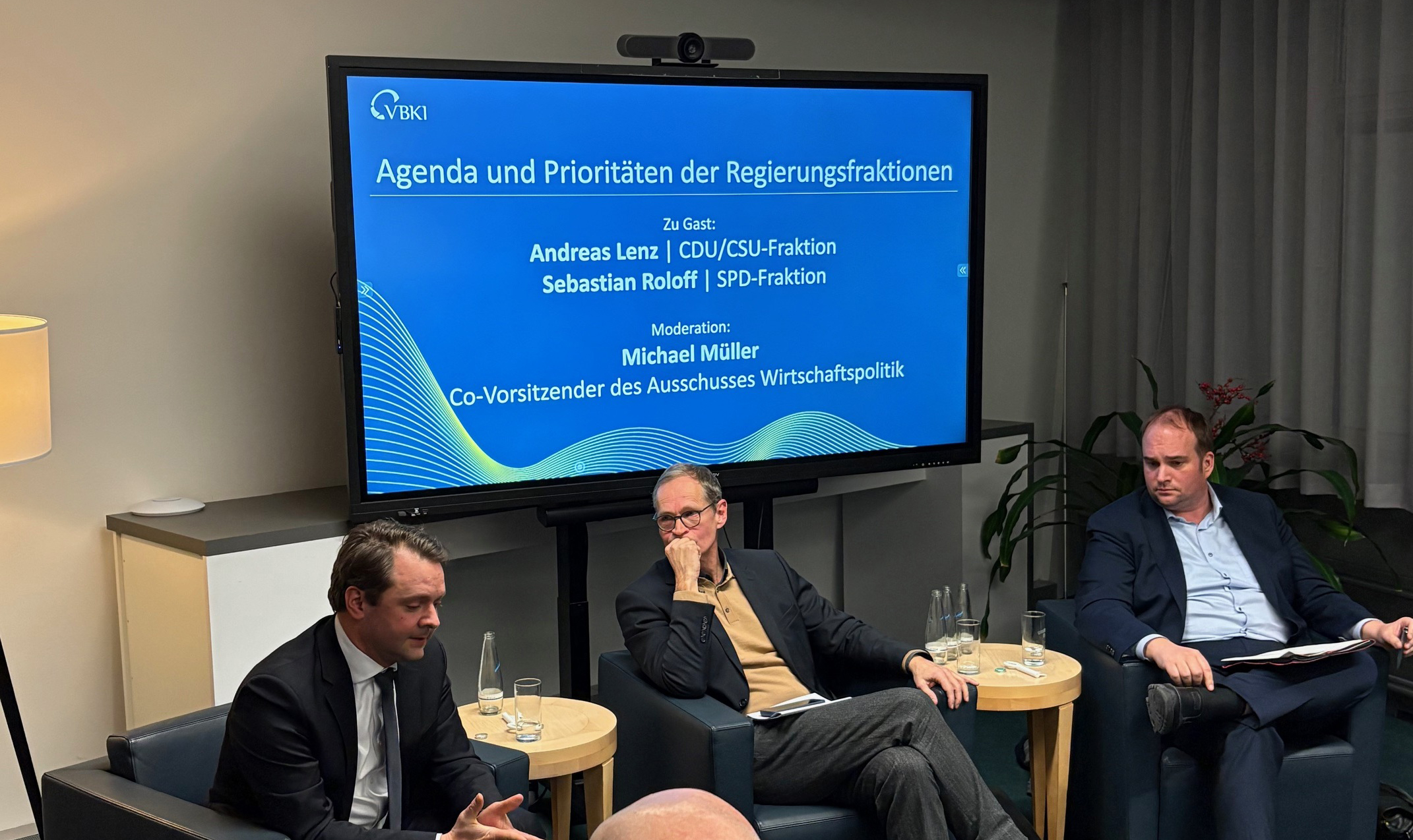
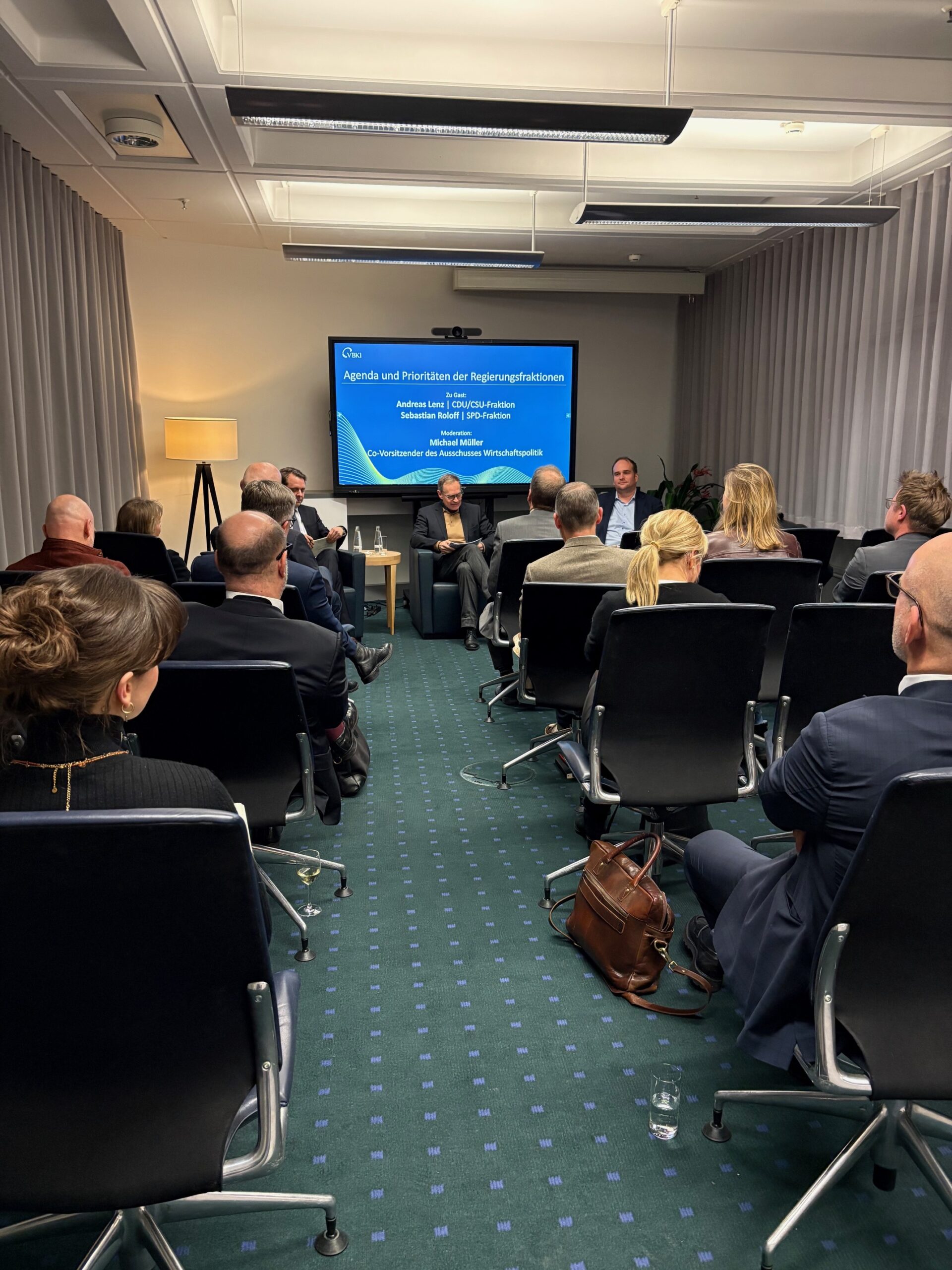
When he took office, Chancellor Friedrich Merz announced "Rambozambo." But so far, there has been no decisive strategy to get the German economy back on track. Will the year 2026 finally bring the long-awaited reforms? At the VBKI, the economic policy spokespersons for the governing parties, namely Andreas Lenz (CDU/CSU parliamentary group) and Sebastian Roloff (SPD parliamentary group), explained the federal government's economic policy agenda and then answered questions from VBKI members. The deliberately small setting allowed for an open and intensive exchange.
In his introduction, Michael Müller, co-chair of the Economic Policy Committee and organizer and moderator of the evening, outlined the tense situation: economic and geopolitical challenges are greater than ever, while urgently needed reforms have so far failed to materialize. After the end of the traffic light coalition government, there was agreement on the need for reform, but concrete implementation was still pending. At the same time, pressure to deliver results was growing—after all, 2026 was an important election year.
Andreas Lenz opened the discussion with a look at the multitude of global crises—from geopolitical conflicts to increasing trade barriers. The CDU/CSU's goal is to provide a clear understanding of the international situation while strengthening Germany's competitiveness as a business location. Key issues include a secure energy supply, strengthening the export economy, and reforms in the labor market and social security systems. Competitiveness is the overarching theme from which all other areas of political action are derived.
Sebastian Roloff agreed with the basic principles and added the SPD's perspective. He pointed to rising private investment, a record number of start-ups in 2025, and significant investment in digitalization. The promotion of innovation and "ground growth" had been driven forward in particular by the traffic light coalition government. Nevertheless, he conceded that decisions needed to be made more quickly in order to regain trust.
In the ensuing discussion, Michael Müller raised the key question of the continuing uncertainty and dissatisfaction among many entrepreneurs—despite extensive investment packages. The need for reform in the healthcare system and growing skepticism toward centrist political parties were also critically addressed.
Both speakers made it clear that 2026 must be a decisive year. Without visible reforms and tangible improvements, the mood will not change.
You might also be interested in

Digital sovereignty becomes a question of survival
Whitepaper: VBKI calls for strategy for digital independence of SMEs
10 measures: How Berlin will become Europe's health capital
VBKI Health Committee presents action plan and launches "Berlin Health Map"
Young. Successful. Pioneering.
VBKI and Tagesspiegel honor Berlin's "Top 40 to 40"