
"Water knows no boundaries"
Third Water Congress Berlin-Brandenburg-Saxony 2025
Text: Philipp Zettl | Policy Officer
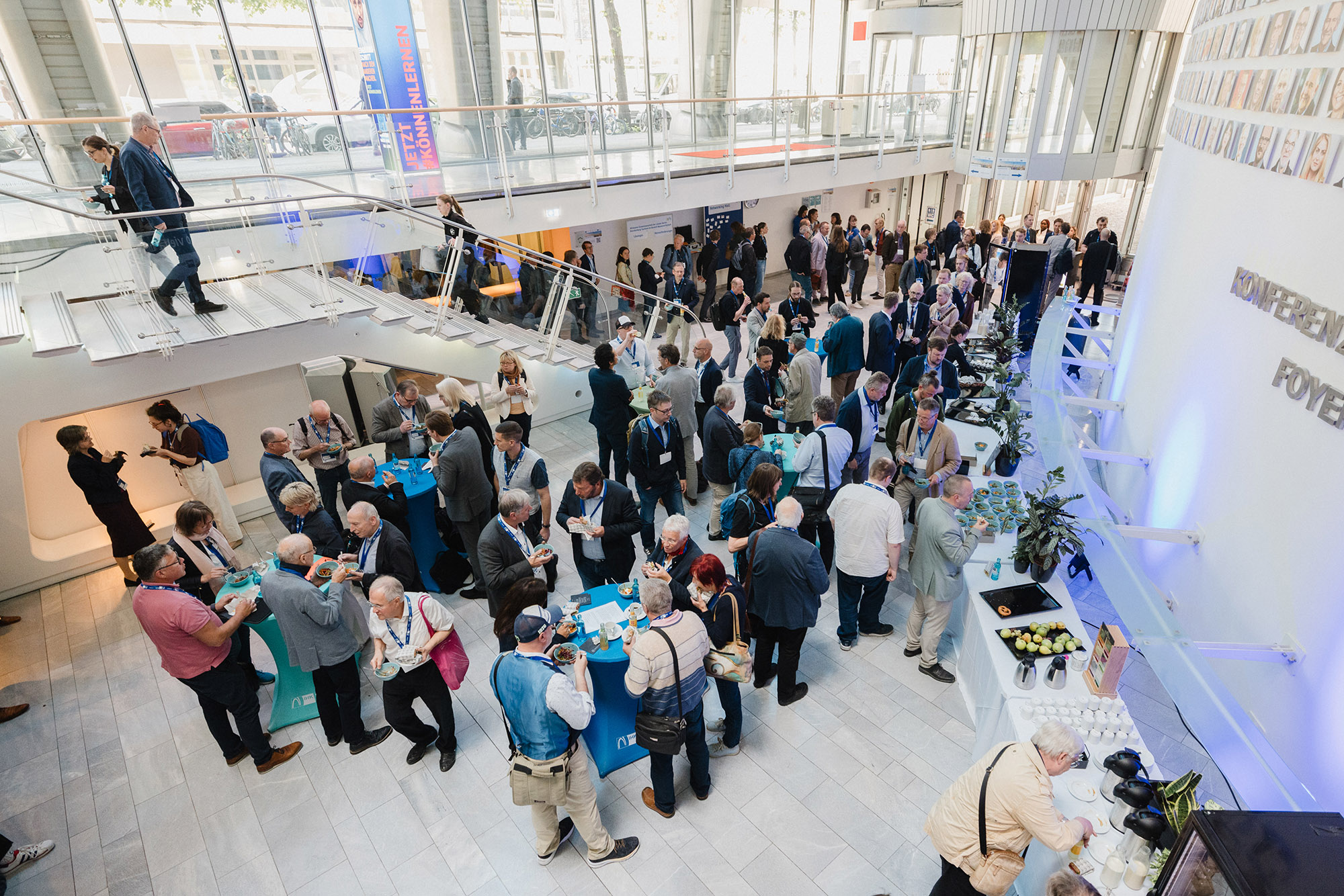
The first drought reports of the season are piling up in Germany. It was therefore the right time to discuss concrete strategies and technical solutions for a crisis-proof water supply with around 250 representatives from business, science and politics at the third Berlin-Brandenburg-Saxony Water Congress - regional, networked and future-oriented. Jointly organized by the Berlin, Brandenburg and Saxony Chambers of Industry and Commerce, the Berlin-Brandenburg and Saxony regional groups of the Association of Municipal Enterprises and the VBKI, the event made it clear how closely climate adaptation, structural change and economic development are intertwined - and that water policy has long since become economic policy as well.
"We must learn to think and act together", VBKI Managing Director Ute Weiland introduced the discussion with this statement. The pressure to act is high - according to the EU climate service Copernicus, this year's March was the warmest March since records began in Europe at 2.41 degrees above the long-term average. According to IHK Berlin Managing Director Manja Schreiner, it is becoming increasingly clear: "Water is a scarce resource."
All photos: Copyright Konstantin Gastmann
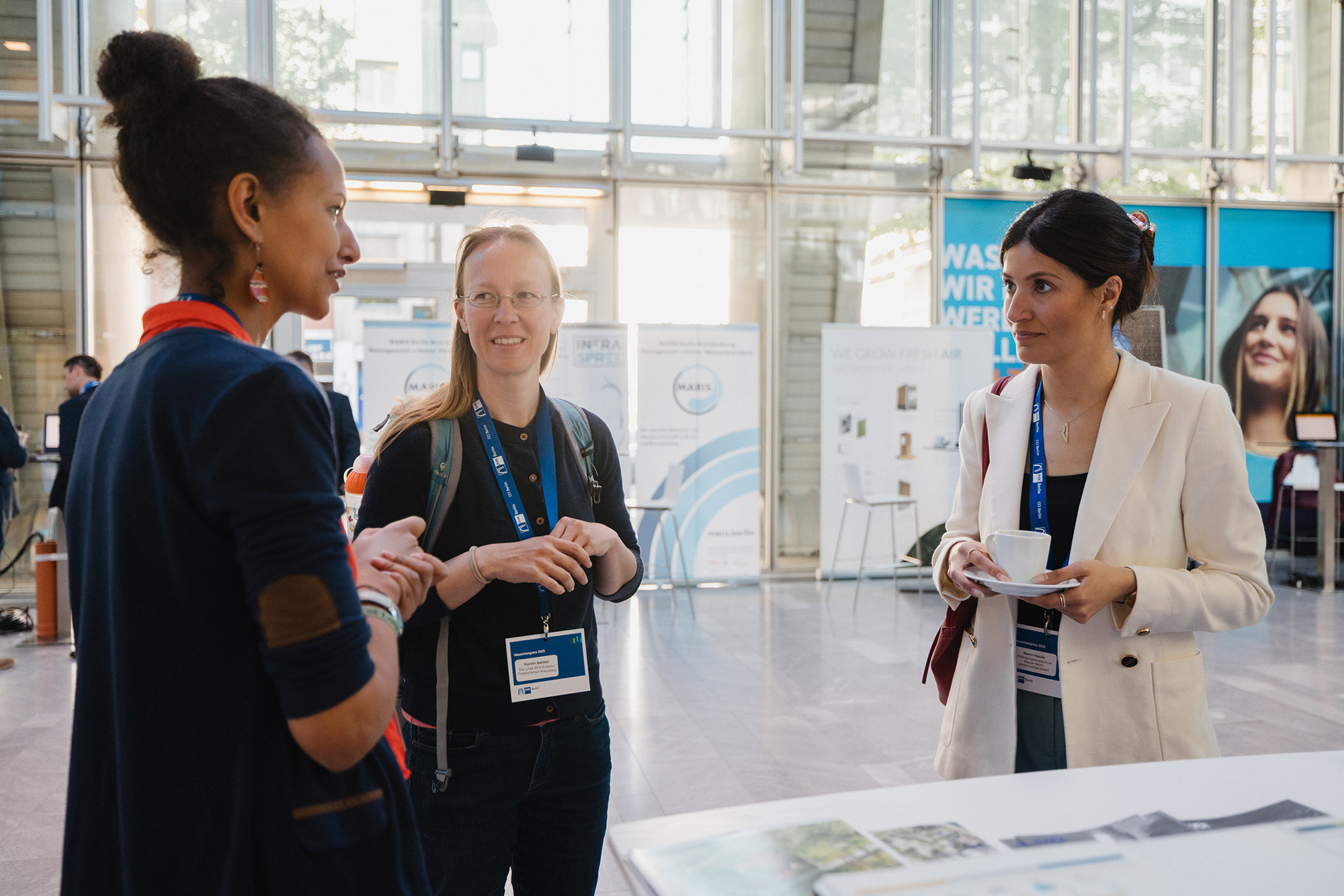
Coordination instead of competition was therefore one of the most important topics of the day. Head of Division Frauke Bathe from the Berlin Senate Department for Mobility, Transport, Climate Protection and the Environment, Anke Herrmann, Head of Department at the Brandenburg Ministry of Agriculture, Food, Environment and Consumer Protection, and Birgit Lange, Head of Division at the Saxon State Ministry for the Environment and Agriculture, reported on how the three federal states are working together on water strategies and structures. What surprised the three of them: How little the topic of water was anchored in the Federal Ministry for the Environment, Nature Conservation, Nuclear Safety and Consumer Protection at the beginning. However, this has improved significantly thanks to regular exchanges. According to Anke Herrmann, the fact that water supply has even made it into the German government's coalition agreement is positive. The biggest current challenge is to improve the data situation and at the same time implement initial measures, reported Bathe.
Christoph Maschek, Managing Director of Wasserverband Lausitz, showed how regional cooperation can work using the example of the transnational drinking water network in the Lusatian mining district. Six municipal suppliers from Saxony and Brandenburg have formed a consortium since 2019. Their goal: flexibility, security of supply and sustainability. An overall technical concept with 67 measures - including storage expansions, new pipelines and a 20% increase in waterworks capacity - was developed in a very short space of time. The basis: clear data, pragmatic cooperation and political tailwind from the coal phase-out
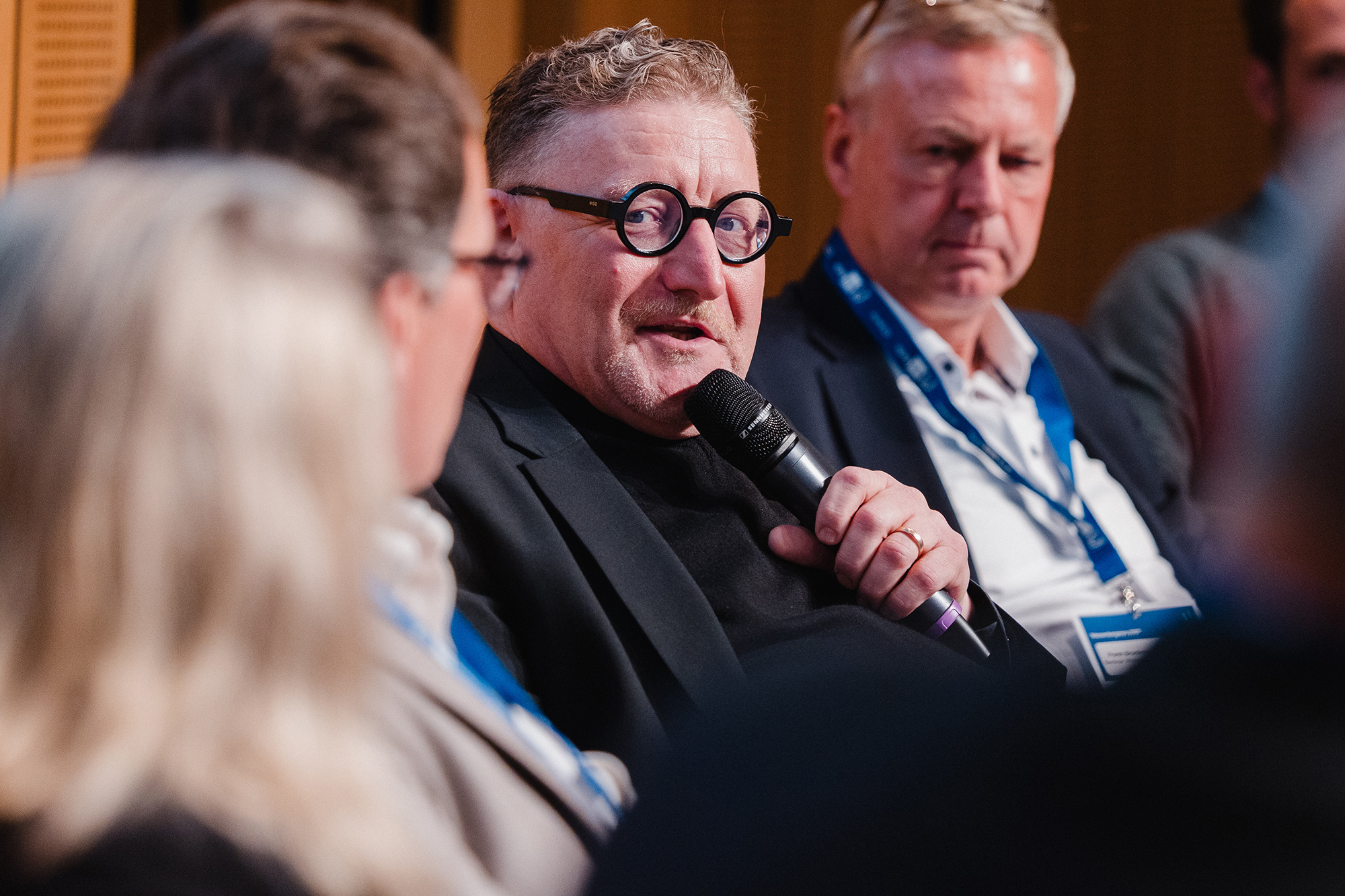
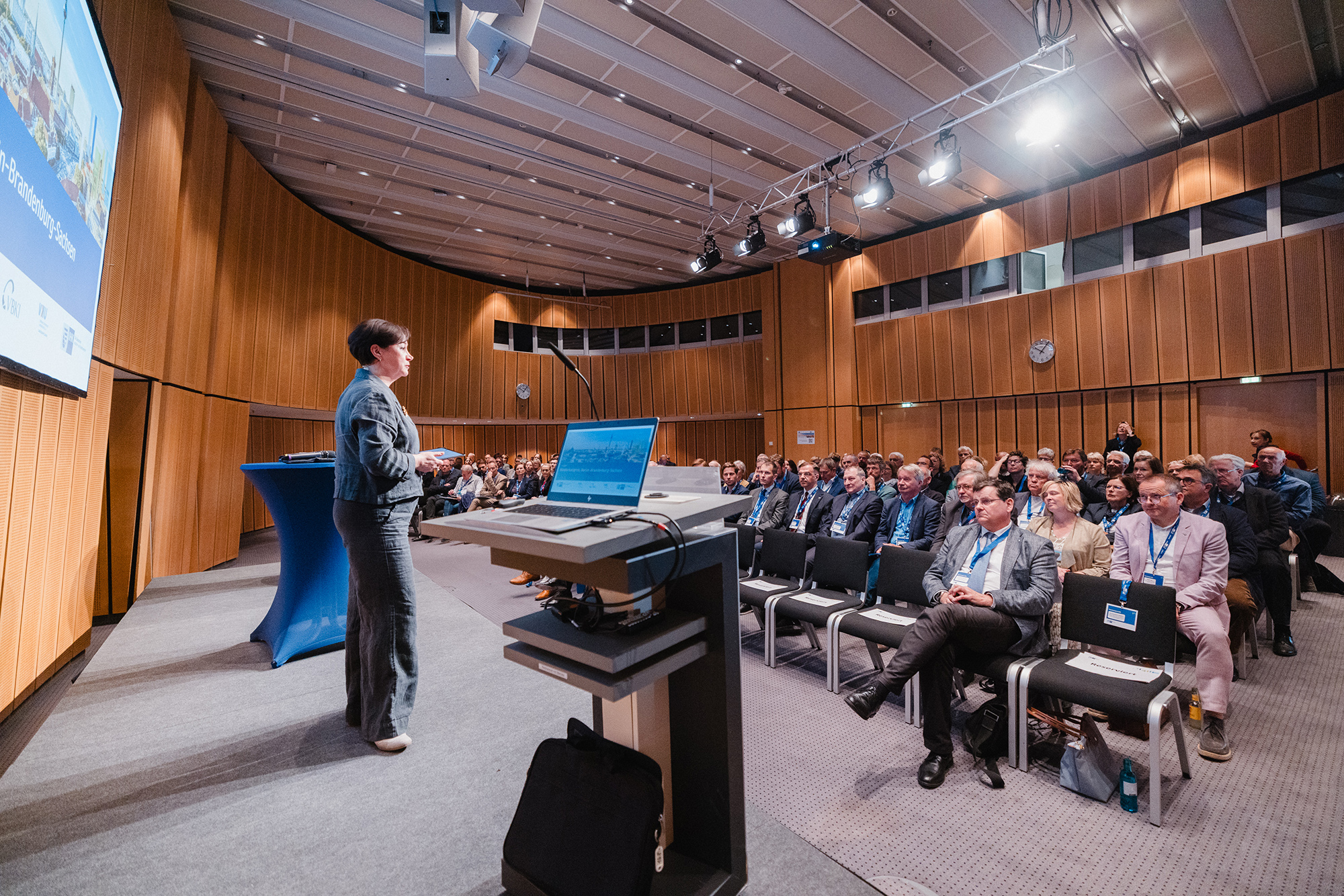
However, lengthy approval procedures, complex responsibilities and sprawling coordination processes are hampering progress in many places. According to Alexander Riederer von Paar, Manager Public Policy & Business Development, Tesla, for example, negotiated with 16 local authorities at the same time during the construction of the company - a hurdle that not every company can afford. It also became clear in the field of renewable energies: the technical possibilities are there - but the regulatory framework is lagging behind. Martin Richter from the Central German Hydropower Association made it clear that 85 to 120 hydropower plants could be reactivated in Saxony alone. However, approvals sometimes take years. At the same time, the combination of hydropower and aquathermics would offer a resource-saving option for heat supply in cities.
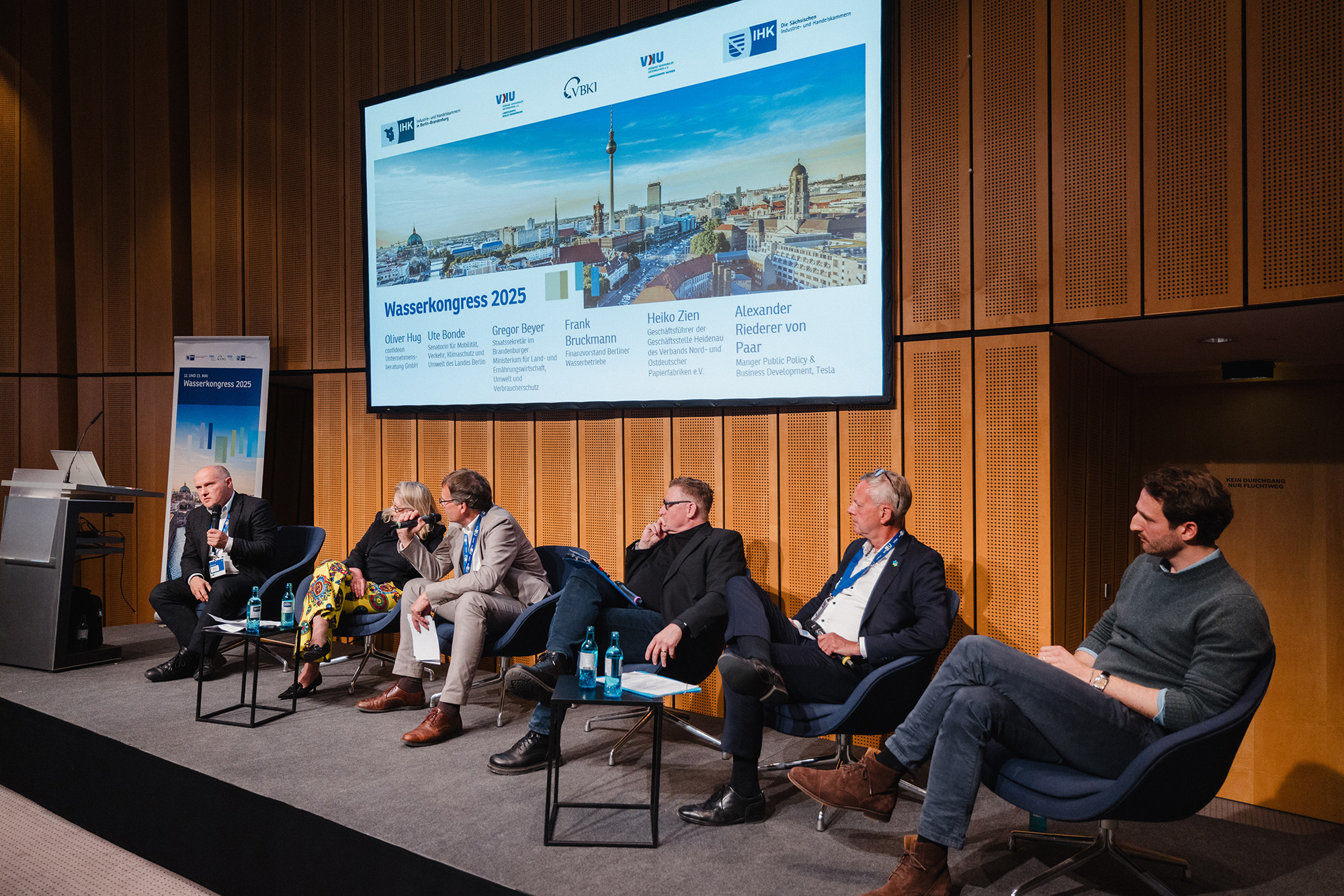
In his presentation "Water without end?", Dr. Christoph Schulte from the Federal Environment Agency pointed out that although Germany is extracting less water than it did 30 years ago, the supply is decreasing at the same time. The situation is particularly critical in regions with intensive agricultural use. He called for guidelines on prioritizing conflicts of use to be implemented, data gaps to be closed and the reuse of water to be promoted. The city could also make a contribution and develop into a "water-sensitive city" using sponge city concepts. According to Frank Bruckmann, CFO of Berliner Wasserbetriebe, the biggest challenge here is the conversion of existing infrastructure. In terms of new construction, Berlin is doing well, thanks in part to the Berlin Rainwater Agency, which provides a lot of advice.
Berlin's Senator for the Environment, Ute Bonde, cited the sponge city-friendly conversion of the Gendarmenmarkt as a positive example. However, both the senator and Brandenburg's State Secretary for the Environment saw the federal government as having a responsibility to secure the water supply in the long term. The latter also named a reform of nature conservation as an important goal - this was often responsible for the long approval procedures. Heiko Zien, Managing Director of the Heidenau office of the Verband Nord- und Ostdeutscher Papierfabriken e.V. (Association of North and East German Paper Mills), named faster approval procedures and a secure long-term water supply as the most important demands of industry with regard to water.
The Water Congress 2025 clearly showed that water policy can only be successful if it is conceived in a cross-departmental and cross-state manner. Whether it's about reservoirs, urban development or company relocations - cooperation is crucial. Or as Berliner Wasserbetriebe board member Frank Bruckmann put it: "The drop of water does not stop at any national border - and neither should we."
You might also be interested in
Joint declaration
Berlin's business community backs Olympic bid
Excellence, networking and the courage to change
Healthcare capital Berlin: expert panel discusses paths, hurdles and opportunities
Warsaw - twin city and role model for Berlin
Opinion piece by Kirsten Giering and Johannes von Thadden