
"Made in Germany must remain the benchmark"
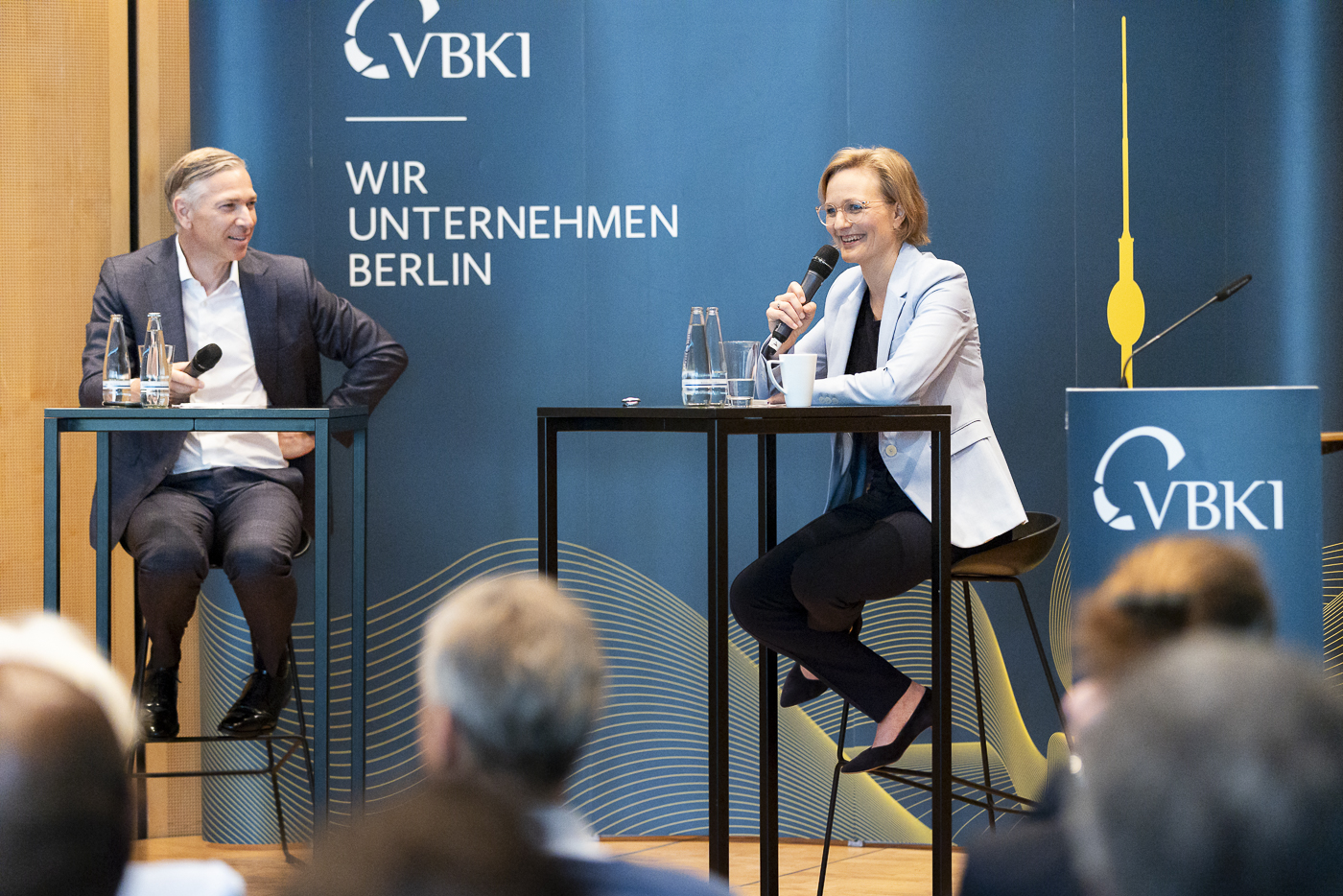
Business Breakfast: Green Party leader Dr. Franziska Brantner at the VBKI
Text: Sebastian Thomas | Head of Communications and Marketing
The traffic light coalition is history - the federal election was followed by a change to a black-red federal government. For Bündnis 90/Die Grünen, this not only meant going into opposition, but also a new beginning in terms of personnel: the withdrawal of Robert Habeck and Annalena Baerbock marked the end of a formative era. Since mid-November 2024, Dr. Franziska Brantner has led the party together with Felix Banaszak - the federal chairwoman answered questions at the Business Breakfast.
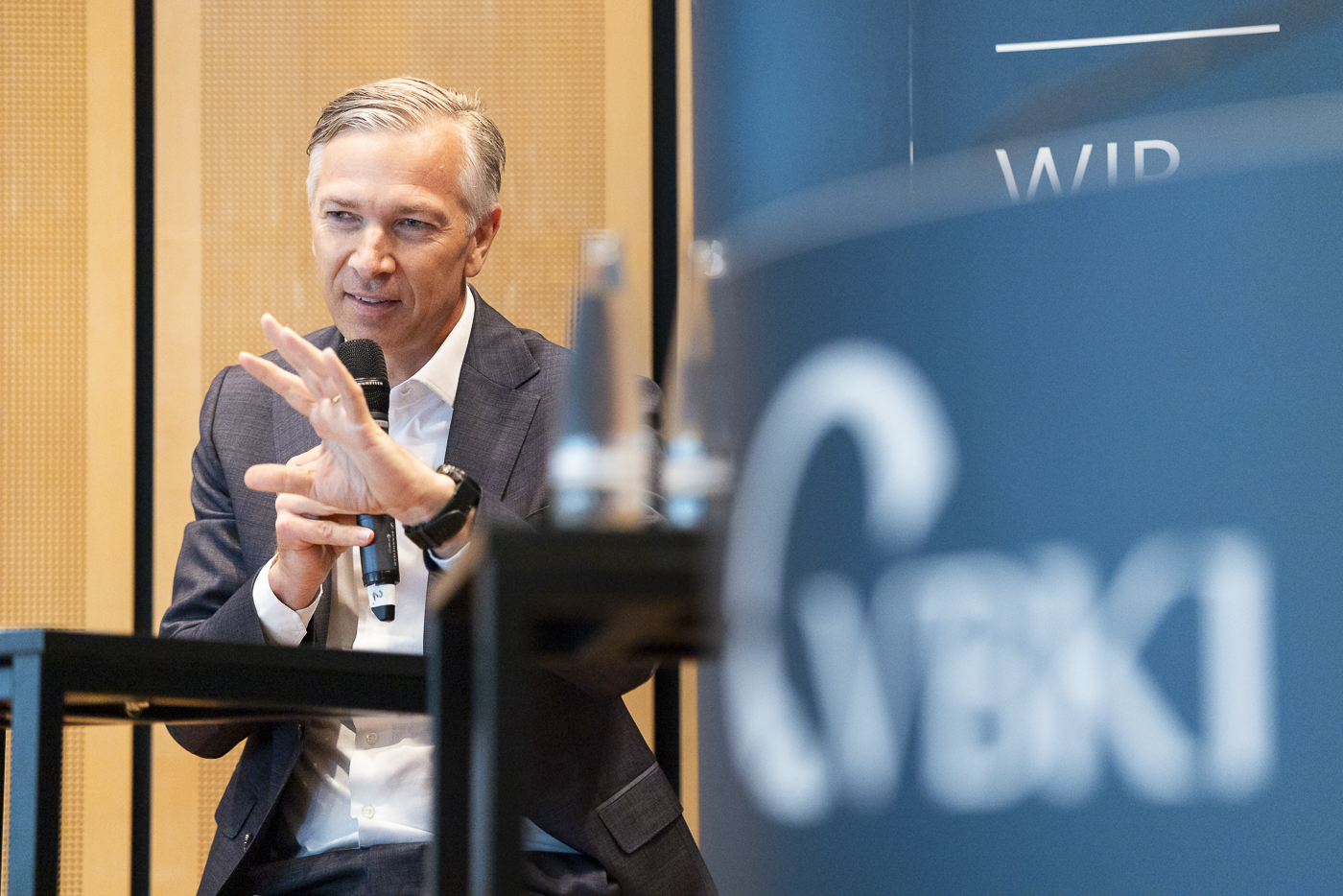
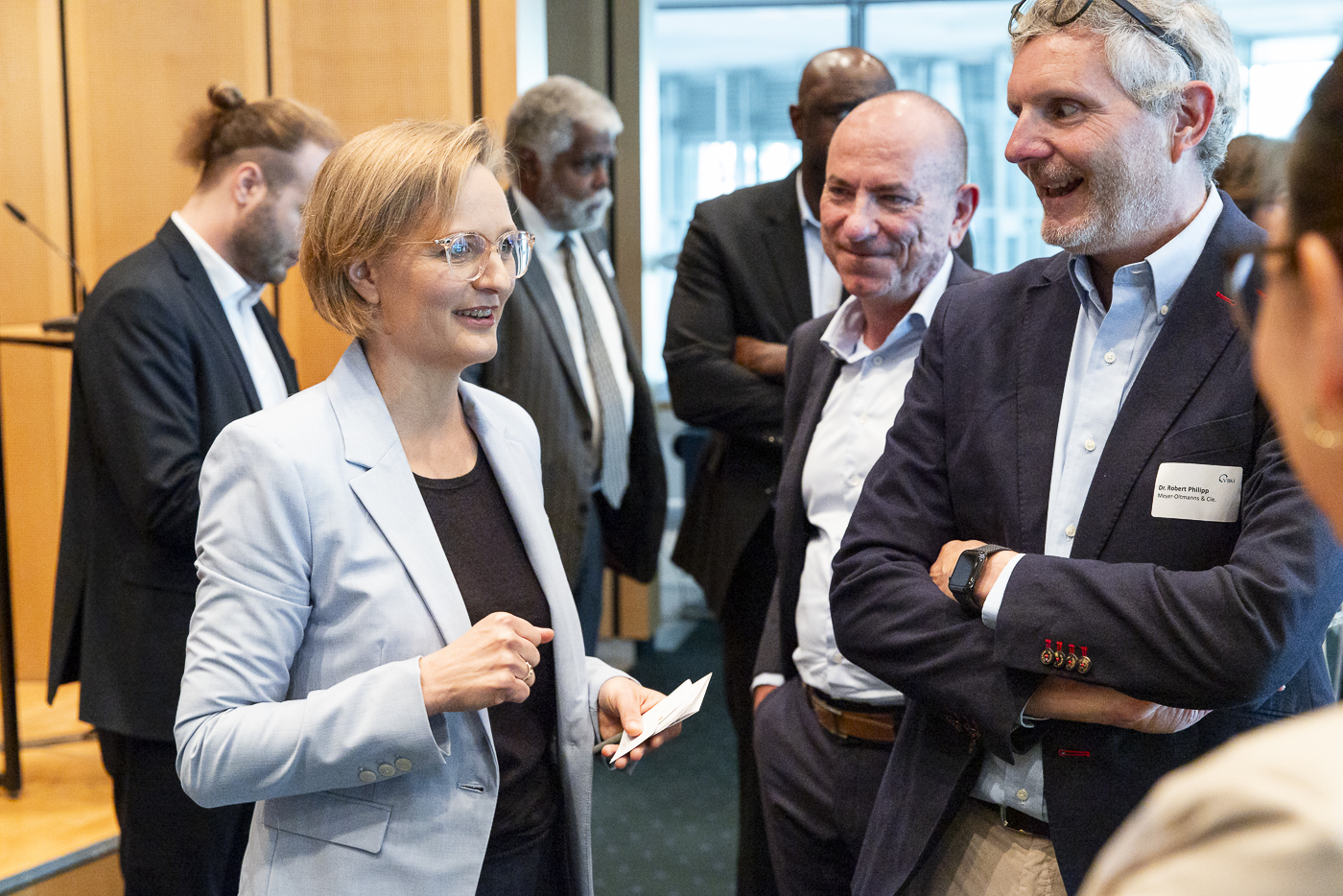
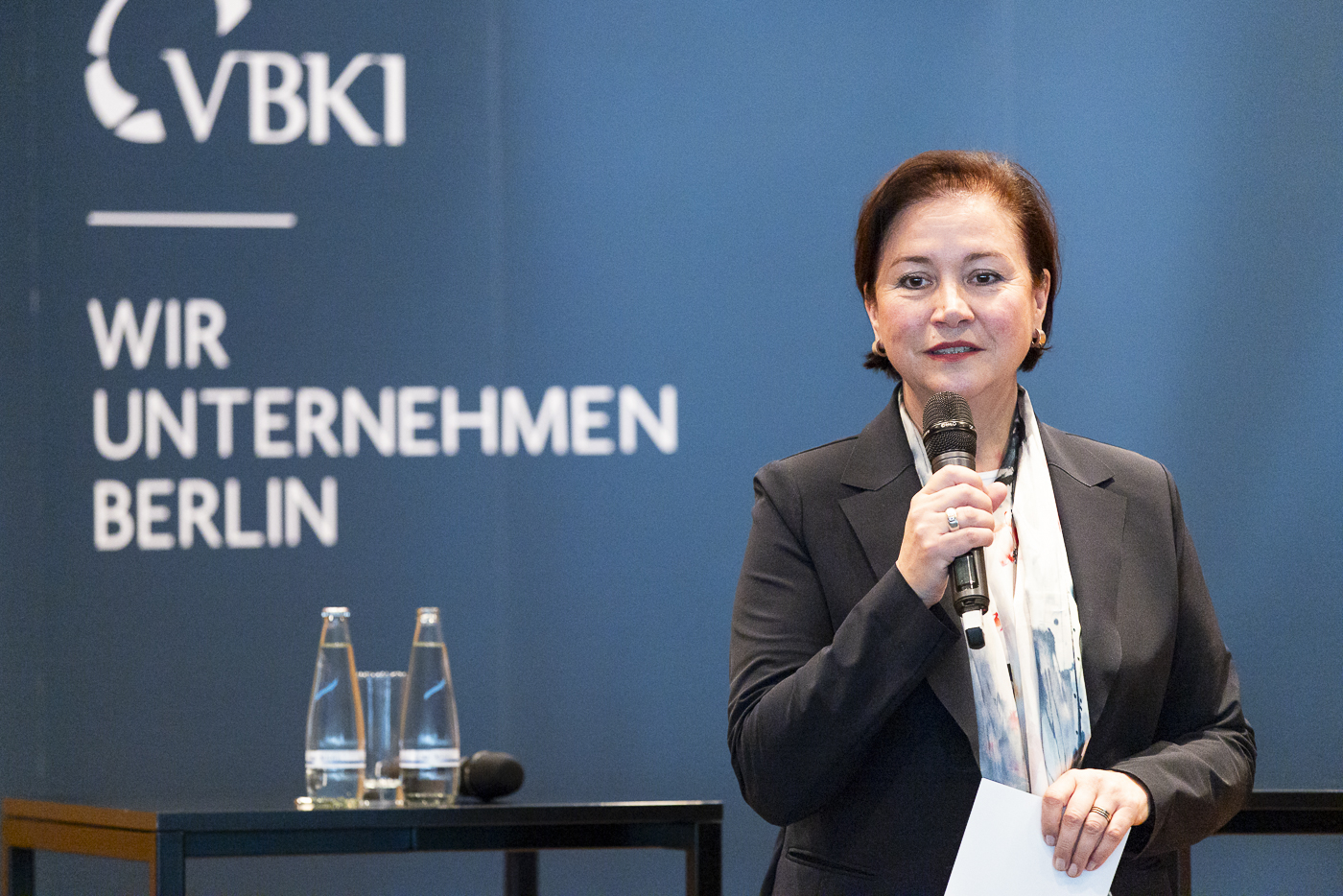
In front of around 80 members and guests of the VBKI, Brantner described the new role of the Greens in the opposition: with the claim to accompany government policy in a critical and constructive manner. Fundamental opposition only strengthens the AfD. The discussion was moderated by VBKI board member Dr. Kay Lindemann.
Between mothers' pensions and billions: Criticism of the new federal government
Brantner left little doubt that she struggles with the political course of the new black-red federal government - not only in terms of content, but also structurally. "The government is systematically outsourcing responsibility - to commissions, working groups and procedures that rarely lead to decisions." There is a lack of regulatory compass and political clarity.
Brantner was particularly critical of the handling of the so-called special fund for transformation. Instead of genuine additional investment in future technologies, money was being diverted to measures that were already planned. "That makes me angry," said Brantner.
Another example of missed opportunities: the pension reform that was already in preparation under the traffic light system. A funded component for long-term stabilization was almost ready for decision - now instead comes the "expensive and backward-looking mothers' pension."
Reform deficits and structural problems
Brantner sees structural modernization as a core task - especially in the healthcare system or in the state structure. "Everyone is talking about more money - but we could save 20 percent in statutory health insurance through better interface management alone." A reform of federalism is also overdue: responsibilities need to be reorganized and obstacles to innovation removed.
Contrary to what moderator Dr. Kay Lindemann implied - "beliefs thrown overboard" - Brantner does not see the Greens' foreign and security policy positions as a break with the past, but as a continuous development of Green principles - at least since the Kosovo war in 1999. Supporting Ukraine is not a departure from Green principles, but a logical consequence of a policy in the tradition of Joschka Fischer. Incidentally, she had already warned in 2014 against becoming too dependent on Russian gas," said Brantner.
Industrial policy with a sense of proportion - and technological foresight
Brantner pleaded for an innovation-driven industrial policy that does not get bogged down in subsidies but keeps value creation in Europe. The Northvolt shipwreck or Arcelor Mittal's skepticism towards green hydrogen show that transformation policy needs to be rethought - but without losing direction. Strengthening European resilience will also be a major issue in the future. Basically, the twofold question must always be answered: How do we create prosperity that does not destroy the planet? How do we create a crisis-proof economy?
Securing technological sovereignty is particularly important. "I'm worried that we'll be importing cleantech technologies from China in 10 to 15 years - if we don't act now." Germany still has competitive advantages in geothermal energy, small electrolysers and CCU technologies - these must be exploited. Branter also called for stronger regulation of the activities of US tech giants in Europe. However, implementation should be regulated at federal level, not at state level.
Digital infrastructure was also a topic: data centers are part of the energy-intensive economy and should also benefit from the planned reduction in electricity tax. Brantner does not see a problem for security of supply in Germany, even with growing energy requirements - for example due to the advance of AI. In this respect, Germany is in a much better position than the USA, for example.
Green self-criticism
However, Brantner was also not sparing with self-criticism: the heating law had been poorly prepared, successes of the traffic light had received little public attention. The social "asynchronicity" in climate protection remains a communicative and political problem. In retrospect, we should have been more flexible at one point or another and sometimes settled for "second-best options". However, it is worrying how the pendulum is currently swinging back worldwide on issues such as gender equality or climate protection and how progress that has already been made is being undone. In opposition, the Greens wanted to stick to their claim: "We are not left, we are not right - we are ahead."
Impressions
To the picture gallery: Please click here>
You might also be interested in
Joint declaration
Berlin's business community backs Olympic bid
Excellence, networking and the courage to change
Healthcare capital Berlin: expert panel discusses paths, hurdles and opportunities
Warsaw - twin city and role model for Berlin
Opinion piece by Kirsten Giering and Johannes von Thadden