
Securing technological sovereignty
Text: Undine Kugler | Event Management
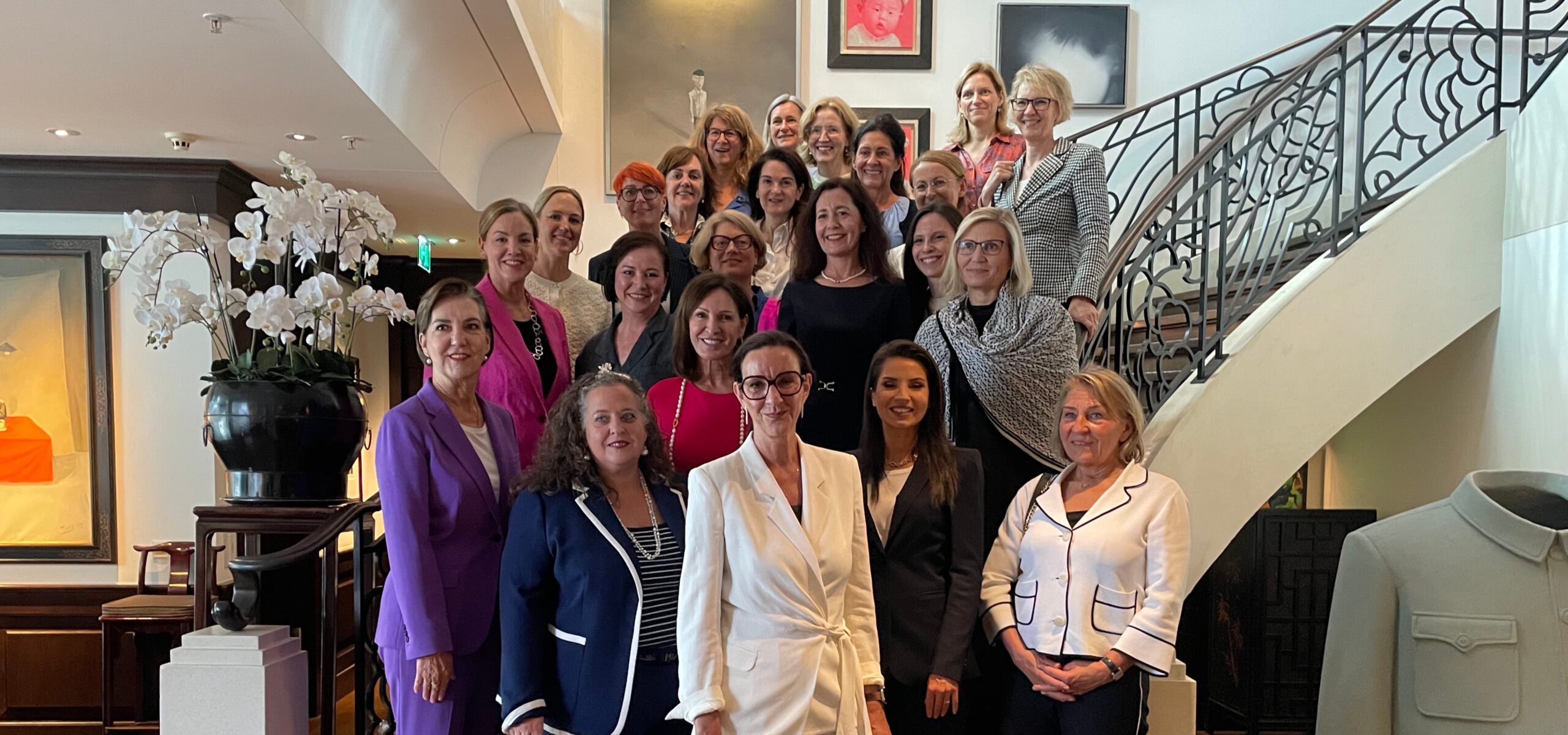
Europe's security situation has changed dramatically in recent years. New threats, technological dependencies and global power shifts call for strategic realignment. What role the medium-sized security and defense industry plays in this - and how it can be strengthened - was the topic of the exclusive Q&A lunch with Cathrin Wilhelm, shareholder of Avilus GmbH and board member of the Federal Association of the German Security and Defense Industry (BDSV).
Wilhelm made it clear right from the start that the defense industry has long since ceased to be an isolated sector, but rather a central component of technological value creation in Germany - with multiple overlaps with areas such as logistics, sensor technology, medical care and energy infrastructure. "We are talking about dual-use technologies here, which are essential for both civil and military applications," said Wilhelm.
"Responsibility and transparency are not opposites of resilience - on the contrary, they are a prerequisite."
Cathrin Wilhelm | Partner of Avilus GmbH and board member of the Federal Association of the German Security and Defense Industry (BDSV)
Avilus, for example, develops and manufactures unmanned aerial systems with different mission profiles - including medical evacuation, reconnaissance, mobile sensor integration and tactical logistics. The modular drone systems with the names Cricket, Wasp and Buzzard demonstrate this: Innovation in defense often starts with small, flexible companies - not large corporations.
A key topic was the issue of testing and approving such technologies. Wilhelm pointed out the hurdles that exist for medium-sized providers in particular: "We don't just need more funding - above all, we need more agile processes and validated test environments." Avilus is one of the few companies in Germany with the Europe-wide recognized LUC certificate (Light UAS Operator Certificate) - a prerequisite for the independent operation of complex drone systems.
Wilhelm was critical of Germany's willingness to take risks when it comes to technology funding. Although there are many programs, they are often too slow or not tailored enough to market-ready solutions. Time is a decisive factor in defense in particular. "Other countries act faster because they focus more on targeted incentives rather than administration," says Wilhelm. Venture capital is still difficult to mobilize in security-relevant areas - although there is a great need for it, especially among SMEs.
Another aspect was the question of technological sovereignty: Wilhelm emphasized the importance of European value chains - especially in sensor technology, electronics and software. "If we can no longer develop and build our systems ourselves, we will not only lose our independence, but also our innovative strength." Companies like Avilus are able to handle everything in-house, from design and production to integration - a strategic advantage.
This was followed by an intensive discussion with the participating female entrepreneurs, including the question: How can trust in the security industry be strengthened - especially in the face of public reservations? Wilhelm's answer was clear: "Responsibility and transparency are not opposites of defensiveness - on the contrary, they are a prerequisite."
You might also be interested in
Joint declaration
Berlin's business community backs Olympic bid
Excellence, networking and the courage to change
Healthcare capital Berlin: expert panel discusses paths, hurdles and opportunities

Warsaw - twin city and role model for Berlin
Opinion piece by Kirsten Giering and Johannes von Thadden