
Berlin's Blueprint for a Health Hub
Four parties, one common goal: The political dialogue highlighted where Berlin needs to focus its efforts as a healthcare hub
Text by Jonas Koch | Junior Communications and Marketing Specialist
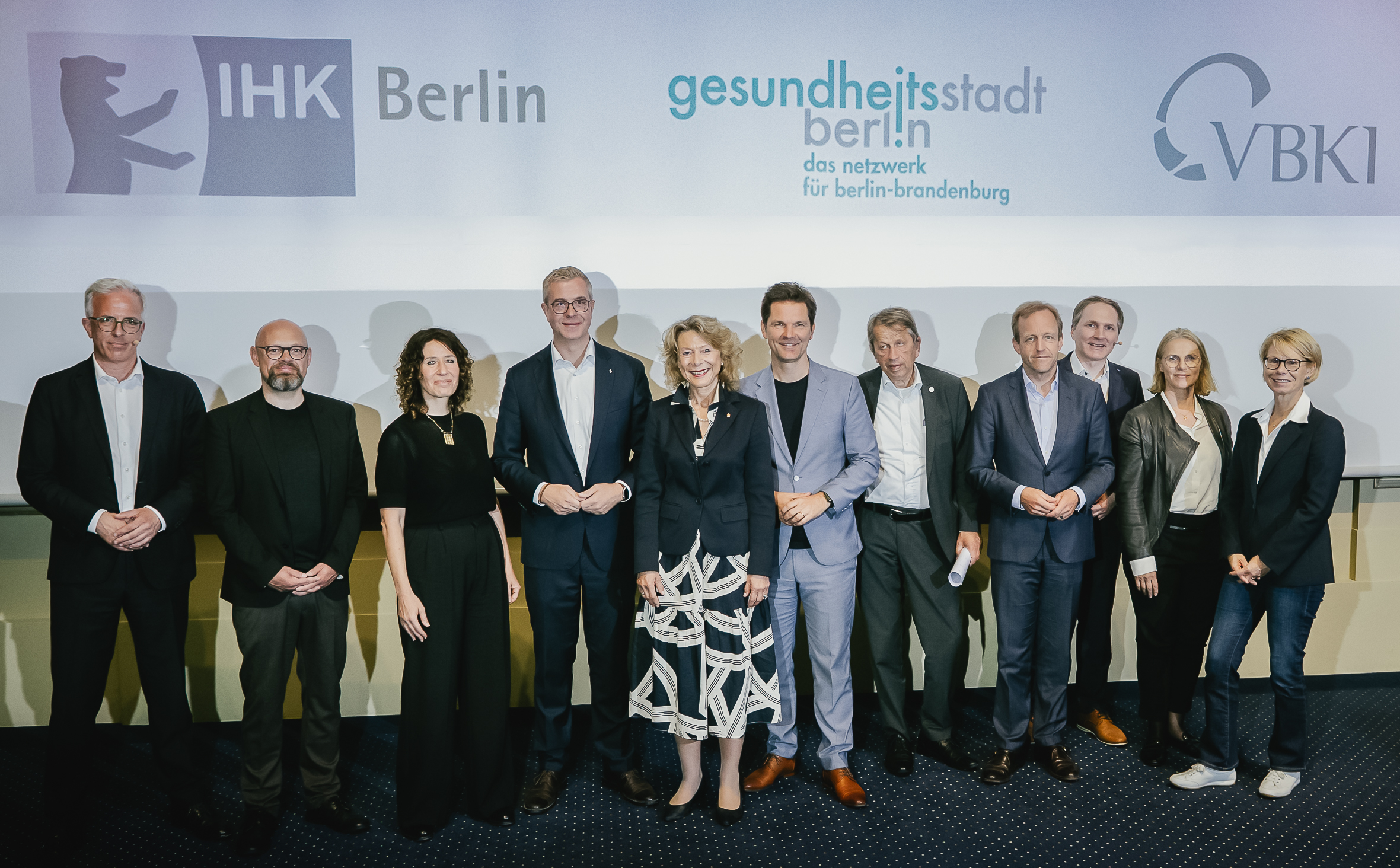
Together with the Berlin Chamber of Commerce and Industry (IHK Berlin) and Gesundheitsstadt Berlin e.V., we hosted the 2026 Political Dialogue at the Langenbeck-Virchow-Haus on Monday, July 6. The discussion was based on the 10-point paper from our joint initiative, “Berlin: European Health Metropolis.”
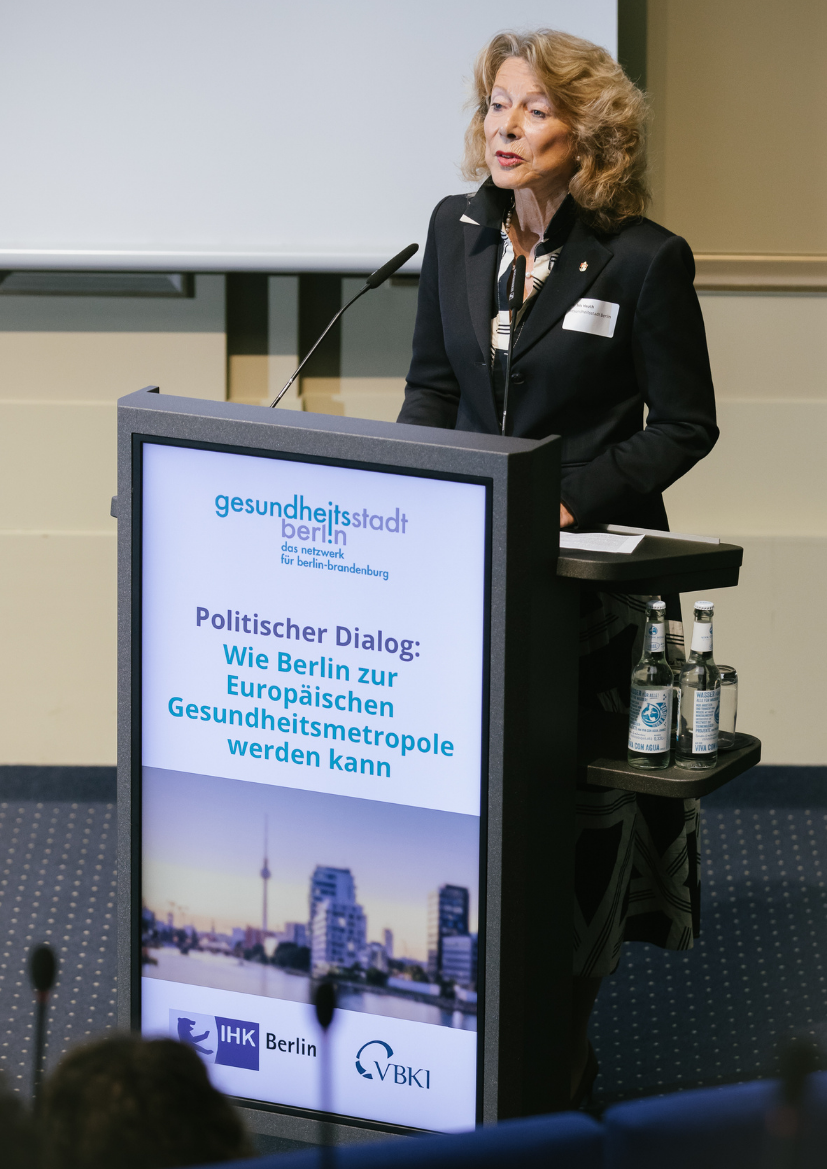
Dr. Iris Hauth (Gesundheitsstadt Berlin e.V.) opened the evening by stating that investments in health are investments in Berlin as a business location, and that the upcoming legislative term will be decisive.
Prof. Dr. Heyo K. Kroemer (Charité) highlighted the urgent need for action: About 30 percent of workers in the healthcare sector will retire over the next ten years. In his view, digital and AI-powered systems—which are becoming increasingly “agent-like” and could also assist with treatment decisions in the future—could help fill part of this gap.
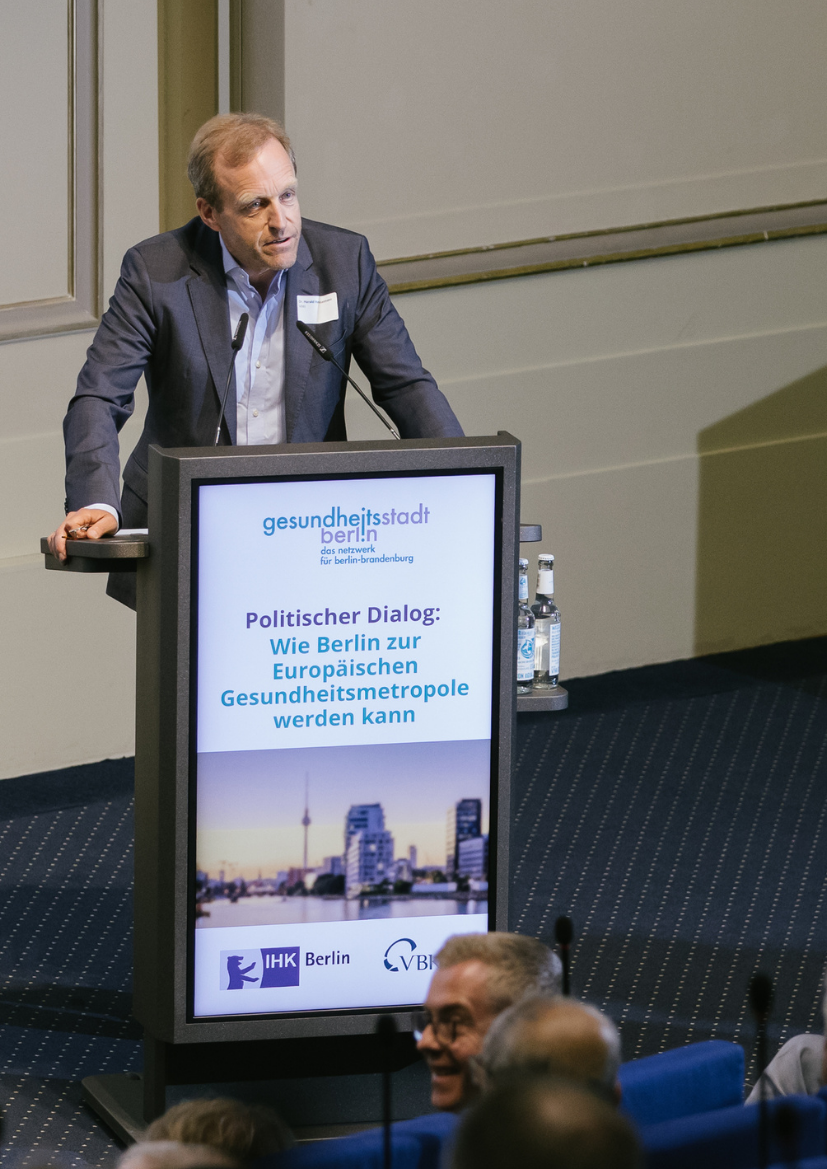
During the first round of discussions, different perspectives on hospital reform became apparent. Among other things, the discussion focused on how to ensure emergency care without evaluating it solely on the basis of economic criteria. At the same time, participants addressed the investment backlog in Berlin’s hospitals, the reduction in medical school spots, and structural shortcomings from past decades. The concentration on fewer but larger hospital locations was also discussed as a possible way to improve the quality of care.
Our board member Dr. Harald Hasselmann then summed up the key issue facing the city: Berlin-based health care startups are valued significantly lower internationally than they are, for example, in the U.S., which carries the risk of an early sell-off. His proposal: a central point of contact for the health care industry within the city administration, rather than fragmented responsibilities.
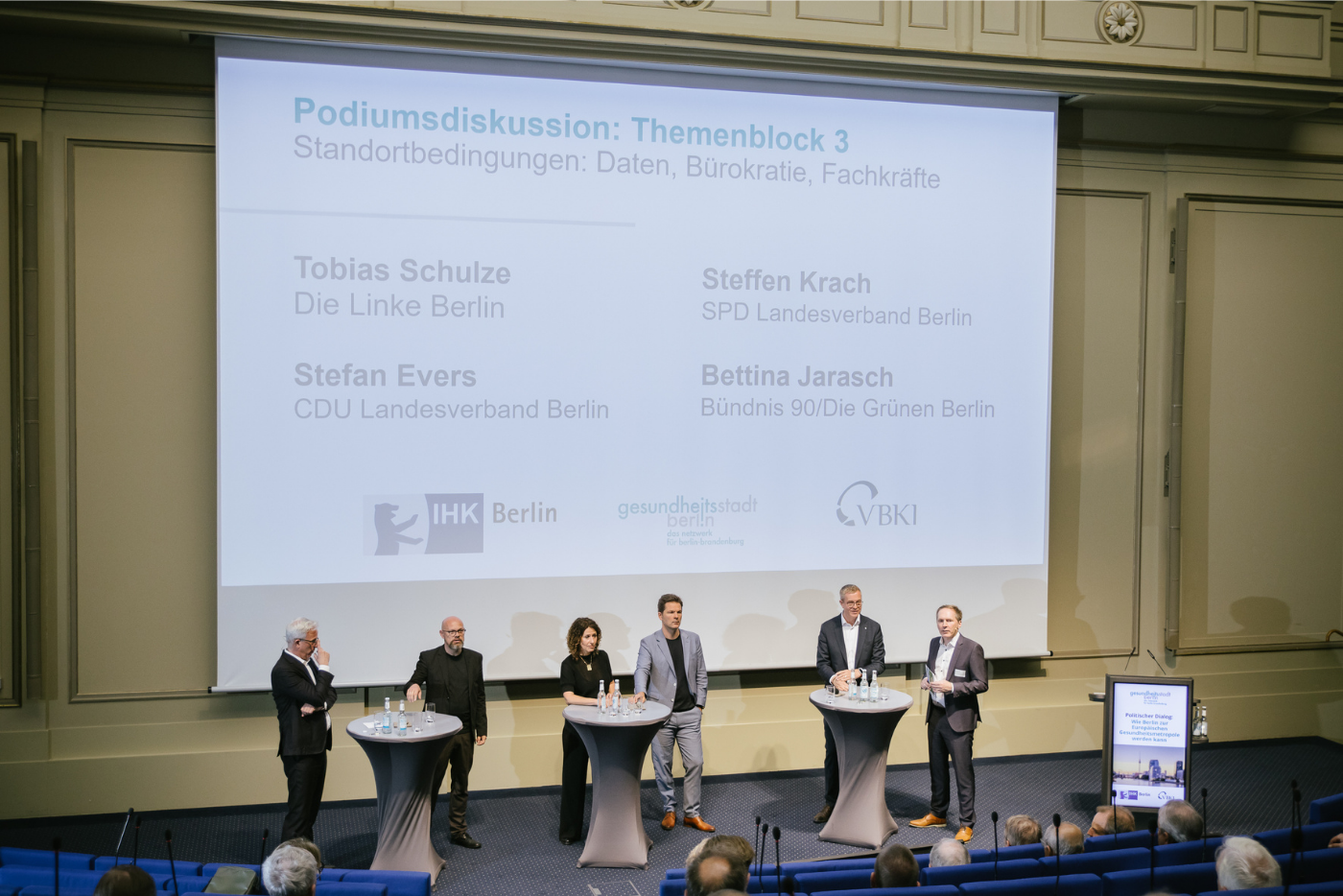
On the panel, Stefan Evers, Senator for Finance and deputy state chair of the CDU Berlin; Bettina Jarasch, co-lead candidate for Alliance 90/The Greens Berlin; Steffen Krach, lead candidate and state chair of the Berlin SPD; and Tobias Schulze, co-caucus chair of The Left in the Berlin House of Representatives, addressed this proposal. Despite differing perspectives, there was agreement that Berlin needs a central point of contact for the healthcare industry. It remained unclear whether it should be housed within the Department of Economic Affairs or the Department of Science and Research.
In her keynote address, Anett Hüssen (Berlin Chamber of Industry and Commerce) called for concrete steps rather than further debate: a regulatory hub to streamline approval processes and expedite the recognition of foreign skilled workers.
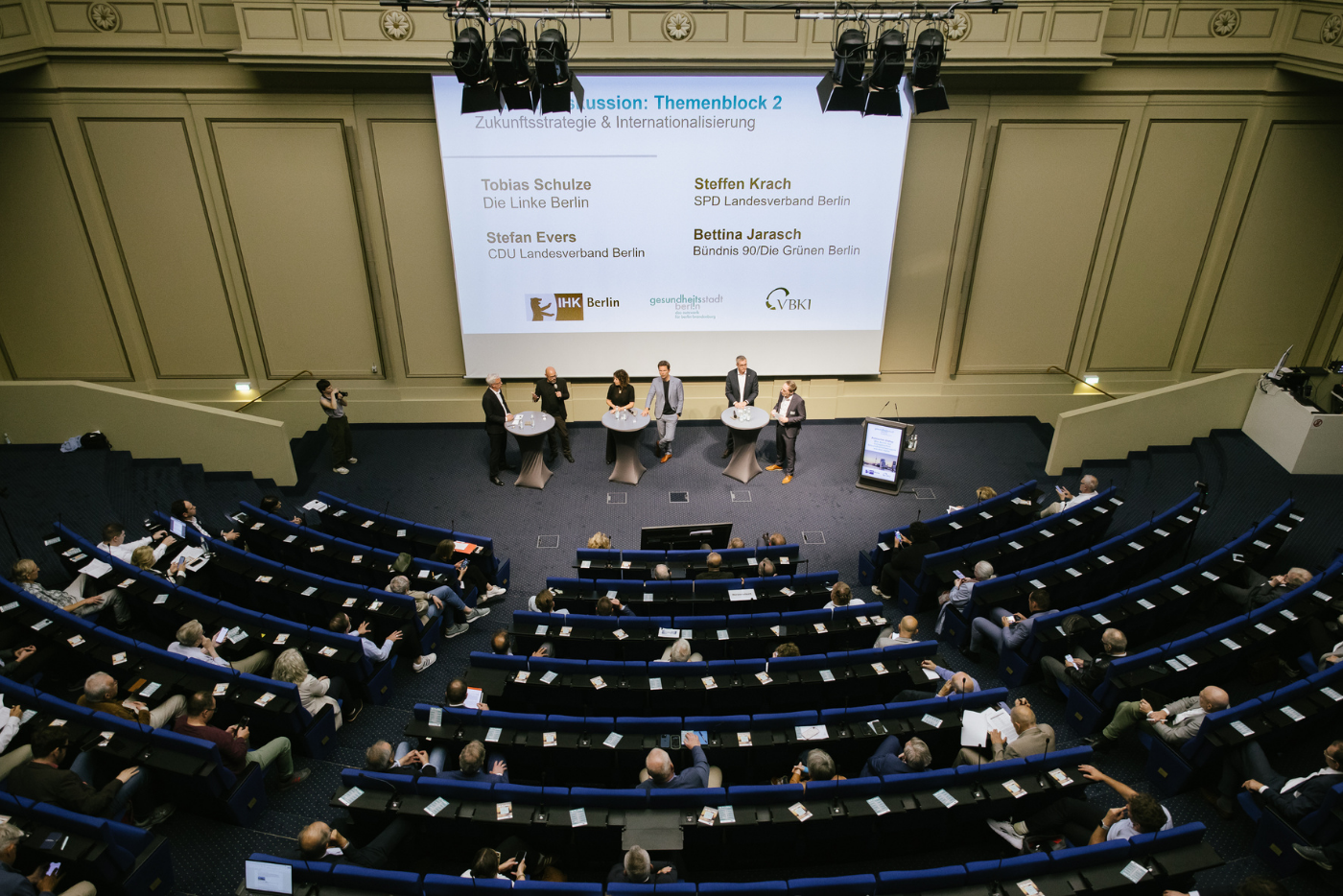
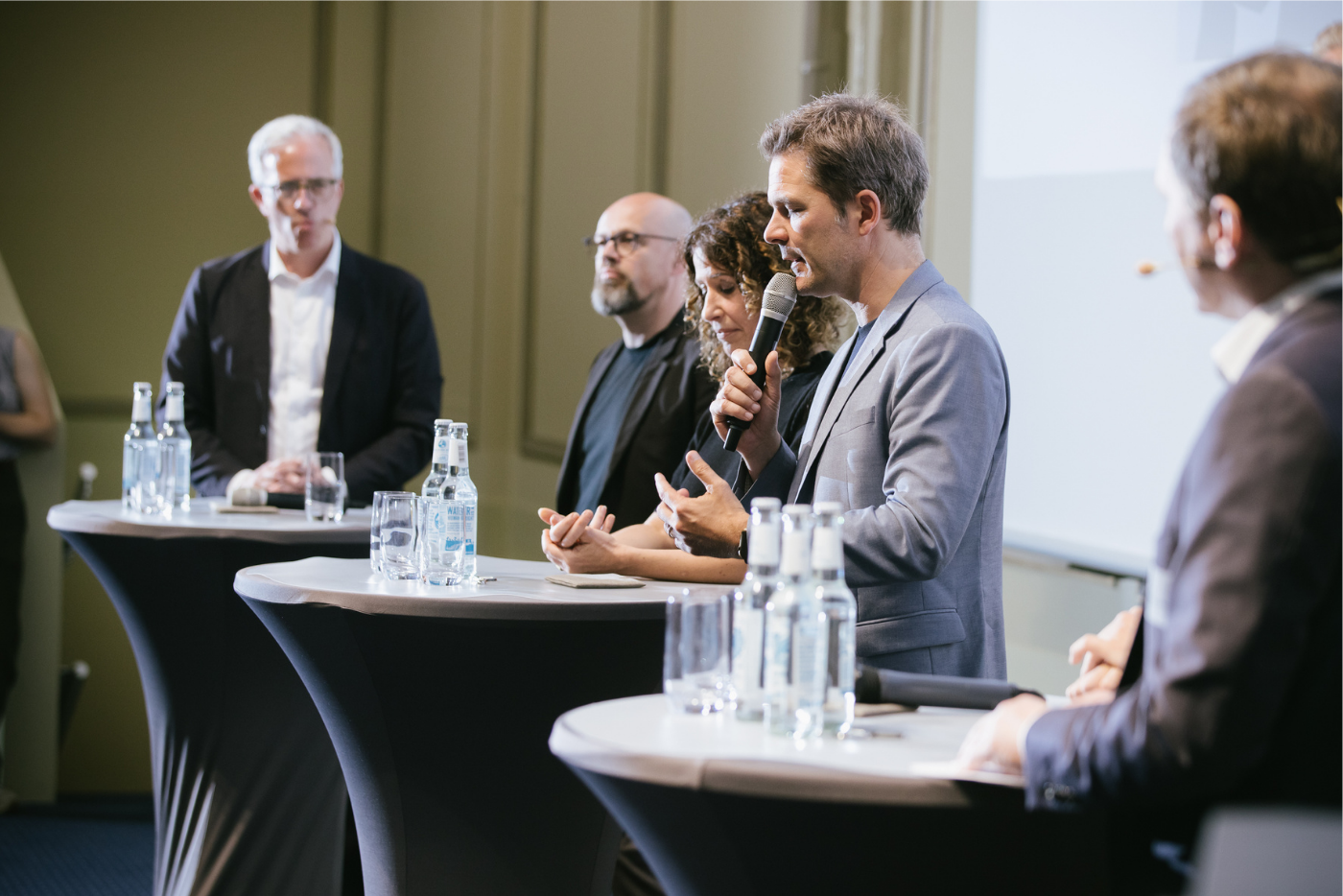
The final round focused on health data: Several panelists argued that data protection and digitization should not be viewed as mutually exclusive. On the topic of skilled workers, everyone agreed that the lengthy LAGESO recognition procedures are a major obstacle.
We would like to extend our heartfelt thanks to all our guests, panelists, and our partners, the Berlin Chamber of Commerce and Industry (IHK Berlin) and Gesundheitsstadt Berlin e.V., for a stimulating evening, and we look forward with great anticipation to the next steps toward making Berlin a European health metropolis.
Photo credit: Gesundheitsstadt Berlin/Claudia Buger
Impressions
To the picture gallery: Please click here>
You might also be interested in

"Who are the Marcuses?"
Film screening and talk at the James-Simon-Galerie
Joint declaration
Berlin's business community backs Olympic bid
"Fundraising is a matter for the boss"
Hauptstadtkulturgespräch: Private cultural funding - but how?