
Why Education Needs Radical Trust
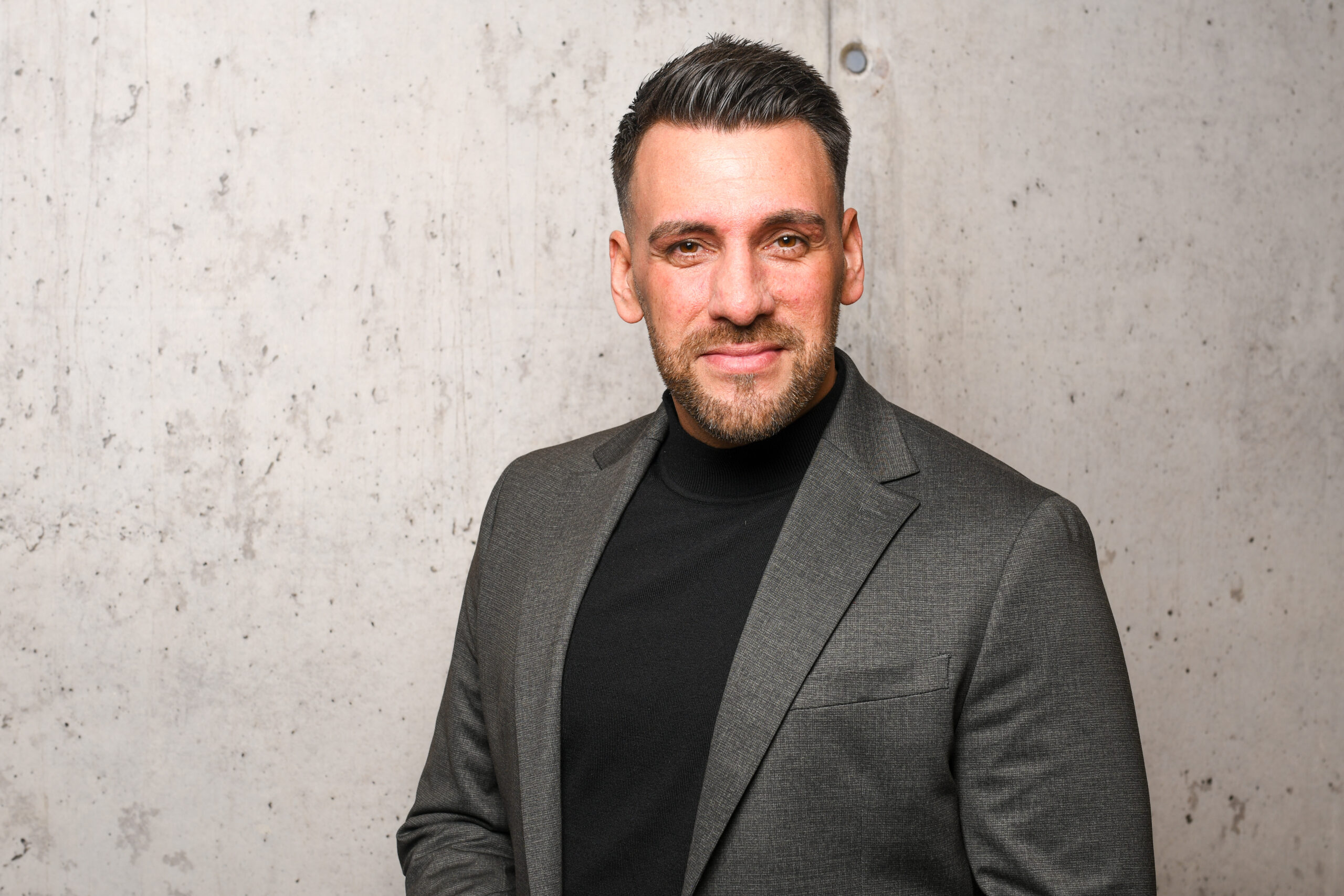
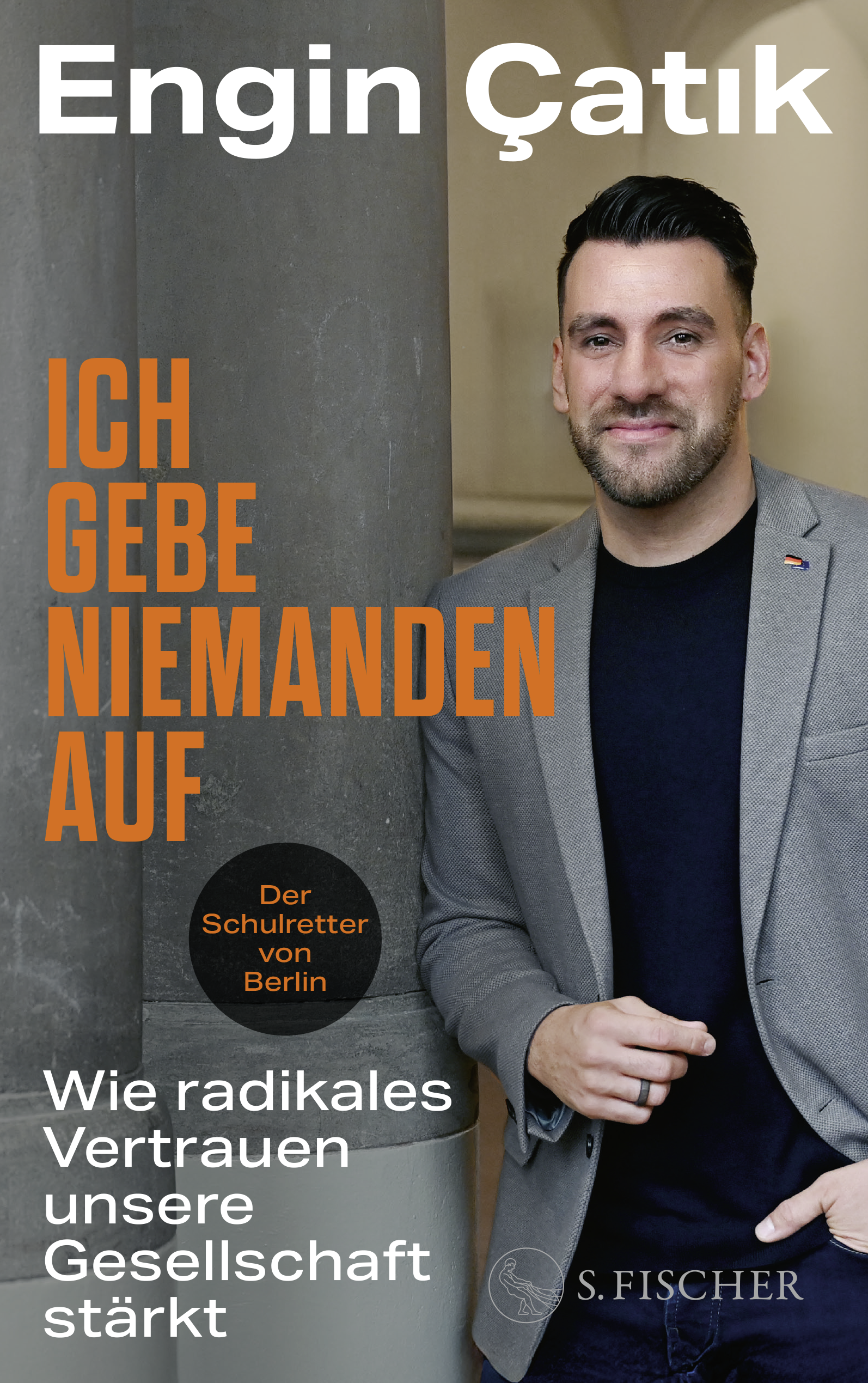
Twice, Engin Çatık has taken over a Berlin school that was considered a failure, and twice he has turned it around. The *Tagesspiegel* calls him Berlin’s most famous school savior. How he does it is detailed in his book *Ich gebe niemanden auf* (*I Don’t Give Up on Anyone*): an exploration of how radical trust strengthens society. A conversation about background, personal responsibility, and what companies can accomplish in schools.
The interview was conducted by Christoph Eckert.
Mr. Çatık, if we were to apply the criteria used by educational researchers to measure starting opportunities, you probably wouldn't be sitting on this side of the desk today.
Engin Çatık: That’s right. I grew up with a single mother. She raised four children; my father was in prison for nearly 15 years, and we were very far removed from education. Given these stressors and risk factors, I would have been someone who wouldn’t have succeeded in the educational system. That’s why I use myself as an example in the book. I don’t like to talk about myself, but I use myself as a character.
What made the difference?
People who placed their trust in me, who reached out to me. Volunteers at my soccer club, teachers. I always felt that they trusted me despite my difficult start in life—that they even gave me the benefit of the doubt—without knowing whether it would lead to success. They invest in a person without knowing at all whether anything will come of it.
You can see that in the subtitle of your book as well. It reads: “How Radical Trust Strengthens Society.” “Radical” is a big word for something that, at first glance, sounds like basic educational principles.
That doesn't mean naive trust. When I speak of radical trust, I really mean: We have no other choice. We have to do it this way. Otherwise, we'll lose a high percentage of children and adolescents—namely, those who are usually referred to as the "left behind."
You have guided three challenging schools in Berlin through change processes—twice as a principal and once as a member of the extended school administration. Does the same principle also work as a leadership tool?
I’ve seen on three occasions that employees can achieve a great deal when given the freedom, resources, and trust to do so. I deliberately say “employees” rather than “colleagues”—after all, I’m the supervisor. My role as a leader is to take responsibility when things go wrong. My shoulders are broad enough. They feel my support and continue to contribute ideas. This applies in schools as well as in businesses.
Why did you write that down now?
Because mistrust is playing an increasingly significant role, even in situations where it isn’t warranted. When people talk publicly about supposedly lazy people, it’s frustrating because I see so many people who are incredibly dedicated. And teaching, believe me, is backbreaking work—especially in Berlin, with the challenges related to migration, language barriers, and poverty.
You mention migration, language, and poverty—so what is the biggest challenge?
In these social circles, real experiences of devaluation and discrimination play a role. I’m not talking about racism at all—I’m talking about classism. People from poverty-stricken communities always feel that people talk about them, not with them. That they aren’t trusted to do anything, that they’re treated as victims. I have to take a stand against that. I consider this a much more pressing problem than immigration. Immigration also plays a role, but we have to look at it more nuancedly.
“People from poverty-stricken backgrounds always feel that people are talking about them, not with them. That they aren’t trusted to do anything, that they’re treated as victims.”
What is missing from this distinction?
I'm not even sure if I still have a migrant background—I'm third generation. We can talk about migration when it comes to Ukrainian refugees or people coming from Syria and Afghanistan. Those are real challenges for us as a society, and we'll only be able to overcome them over time.
Many people in Germany are looking at Berlin with concern.
I can understand these concerns—I really can. The communities we’re talking about stay away from things we take for granted—like involvement and participation. Either because they don’t have a German passport at all, or because they don’t feel safe in those settings. That’s where bridge-builders are needed. That’s the opportunity: to harness the experiences of people who’ve been through this themselves for the benefit of our society.
At your previous school, you introduced five ungraded subjects: Happiness, Responsibility, Attitude, Future, and Empathy. What does a class in one of these subjects look like?
Let’s take the course “Attitude,” which is offered in 10th grade at the Johanna-Eck-Schule, because this year we’re sending these young people out into the big, wide world. And I want to send them off with a certain attitude. I don’t want to influence them at all. It’s not my intention to tell them how they should think politically. But I want them to understand that they bear a responsibility toward society. Back then, there was that incident where the football player Colin Kaepernick took a knee, and with it came the issue of racism in the U.S. Whether his gesture was right or wrong is not for me to decide. My job is to spark the conversation. Some said he was absolutely right. Others thought it was hypocritical. I think this diversity of opinion and the discussion that follows are a good thing.
So, learning how to debate?
That’s correct. Justifying a point of view, disagreeing, listening to others, thinking abstractly: The first educational system—the family—often can no longer teach these things. It can in intact families, but especially in urban areas there are a great many dysfunctional families, and Berlin is the largest urban area in Germany. That’s where the second educational system—the formal education system, whether it’s daycare, elementary school, or high school—must step in to fill this gap. I demand a great deal from my staff in this regard, and some of them feel overwhelmed by it. But young people need these skills, and expectations for them must be clearly defined. That way, they can meet those expectations during their vocational training.
And what about the subject of happiness?
We did that in 7th grade. The first step was to help them understand that they have self-worth. Many of the young people who come to us are on the margins of our society—or at least feel that way. Even when our social services offer them support, these families are often under so much strain that they can’t take advantage of these services because they aren’t accessible enough. So I have to guide them, help them take responsibility for themselves, and tell them: This support is available.
What does this path toward personal responsibility look like in practice?
A sports day we held at our school once led to ten annual memberships in sports clubs, made possible by the VBKI. What happens next is interesting. We struck up conversations with the families—in a very low-key way—and I actually think there were families there who could have received such an offer through the regular channels. But these people have their dignity, too. That’s why they sometimes prefer to accept this offer rather than go to the social services office, saying: “One year, okay, thank you very much, but after that I want to cover the costs myself.”
They say they are now among the top ten percent.
Based on my salary, roughly speaking, yes. And some of these people have no idea what’s going on in other walks of life. Their mental load is so enormous that they don’t always have the resources to accept help. We need to communicate with them much more sensitively, be much less accusatory, and show them much more trust. I’d also be happy to put it in market-economy terms: We need these people. Without them, our companies will go down the drain—and so will our economy and our prosperity.
At school, topics such as self-worth, responsibility, and morality were long discussed elsewhere—in religion class.
Absolutely. In Bavaria, religious language is still part of everyday life. In Berlin, people look at you funny if you say “Grüß Gott” or “Gott sei Dank.” Yet it’s simply a guide and a framework for life. And many children and teenagers are increasingly losing that. I’m a big fan of the concept of charity because it offers an ethical perspective on life. That’s exactly what I’ve tried to do with these five subjects: to give the children guidance and a framework.
“Justifying a point of view, offering a counterargument, listening to others, thinking abstractly: The family—the first educational system—is often no longer able to teach these things.”
Were there any teenagers with whom you felt you had reached a limit? Where you couldn't get through to them anymore?
I never felt like I couldn’t reach a student. Occasionally, I felt like I wasn’t able to help them succeed within the education system. But I never gave up on anyone because of that. We’ve always found ways to help them move forward, and that didn’t always mean vocational training. One company took on one of our students for a year and prepared him for an apprenticeship. There need to be more companies like that, because, unfortunately, our educational system doesn’t always produce young people who are ready for vocational training.
How do you perceive the business community's willingness to get involved in schools?
I’ve noticed that companies are becoming much more open to engaging with schools. And we school administrators need to accept that outstretched hand. I’ve always done that, and I know many colleagues who do the same. Still, there’s room for improvement. Time and again, I’ve secured internship and professional development opportunities from companies because they trusted my judgment, even when my report card grades weren’t the best. If people are reliable, conscientious, punctual, and responsible, it’s not always a problem if they don’t have good grades in history, art, or English. You have to master the basic skills—reading, writing, and arithmetic. But you can have certain shortcomings and still be successful.
What does this collaboration look like in the classroom, specifically?
I had an industry partnership with Deutsche Bahn. It’s not uncommon for students to ask, “Why do I have to calculate volume?” Together with Deutsche Bahn, we applied this concept to math and physics—for example, explaining that a certain amount of fuel is needed to travel from point A to point B. We connected the curriculum to the professional world to answer the question, “Why do I need this?” In the age of AI, this question will come up even more frequently. If we can’t provide meaningful answers, then the only response is: “You’re learning for life.” And that’s not very satisfying for young people. We need to provide answers that extend into the next stage of their lives.
Given everything you've described, one might be tempted to give up. But you clearly haven't.
I’m not someone who advocates a victim mentality—on the contrary: I expect a great deal from people who are living in poverty, who are immigrants, or who are Muslim, for that matter. But it doesn’t help them if I say, “Yes, everything is so terrible.” I have to reach out to them and say: Look, I trust you, I have high hopes for you, and you’ll find your own way. And we can do that together, with the help of many people from the business community.
Engin Çatık, born in Berlin in 1986, made a name for himself as a school principal by successfully transforming two high-risk schools into model programs. In 2026, he was honored with the German Dream Award as a “role model” and, in September, was appointed on an interim basis as director of the Berlin State Institute for Qualification and Quality Development (BliQ).
You might also be interested in

Digital sovereignty becomes a question of survival
Whitepaper: VBKI calls for strategy for digital independence of SMEs

10 measures: How Berlin will become Europe's health capital
VBKI Health Committee presents action plan and launches "Berlin Health Map"
Young. Successful. Pioneering.
VBKI and Tagesspiegel honor Berlin's "Top 40 to 40"